Live Tax-Free: 11 Countries Where Digital Nomads Pay Zero Income Tax (2025)

Dreaming of working from a tropical island, bustling European hub, or futuristic Gulf city without handing a chunk of your income over to taxes? For digital nomads, location independence isn’t just about choosing where to live—it’s about designing a lifestyle that maximizes both freedom and finances. And in 2025, there are still countries where you can legally pay zero personal income tax while running your online business, freelancing, or remote job.

This guide explores 11 tax-free countries for digital nomads—places with no income tax, thriving nomad communities, modern coworking spaces, and reliable internet. We’ll break down how each destination works, the best areas to live as a remote worker, visa options you can actually use, and what hidden costs you should know about. Whether you’re eyeing the Caribbean for its beaches, Europe for its culture, or the Gulf for its modern infrastructure, these destinations prove you can live abroad, grow your income, and keep more of what you earn.

If you’ve ever searched for “best tax-free countries for digital nomads,” “countries with no income tax for remote workers,” or “where digital nomads should live in 2025,” you’re in the right place.

What “Zero Tax” Actually Means

When people say “tax-free country,” they usually mean no local personal income tax on wages or self-employment. But often there are other taxes: VAT/sales/import duties, property tax, or costs of living that eat into savings. Also, visa conditions or time-spent regulations can trigger tax obligations. Always read the fine print.

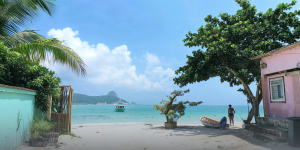
Sapodilla Bay Beach, Providenciales, Turks and Caicos, Robert Harding Video/Shutterstock

How We Picked These Countries & Surprising Exclusions

We used three criteria:

  • Country must not impose personal income tax on individuals (for the income you earn from abroad or remote work).
  • Must have a legal path (visa/residency program, remote-work permit, or digital nomad visa) you can reasonably use in 2024-2025.
  • Must have up-to-date, credible sources confirming both of the above.

Excluded: places where visa programs are suspended, where “zero tax” only applies under very narrow rules, or where costs are so extreme/unpredictable that taxes are only part of a much bigger burden.

Country Deep Dives: 11 Zero-Income-Tax Digital Nomad Destinations

Turks & Caicos Islands

A calm, English-speaking Caribbean base with no personal income tax, capital gains, property tax, inheritance tax, or corporate tax. Day-to-day, expect import duties to carry weight in pricing, plus social/health contributions for residents. Great as a short-to-medium stay base while you keep clients abroad.

Best areas for digital nomads:

  • Providenciales (Provo): Most infrastructure, cafés, and reliable connectivity—base near Grace Bay for amenities.
  • Leeward/Long Bay: Quieter villa/condo living, still close to essentials.
  • Chalk Sound: Stunning water, residential feel (vet internet at your exact address).


Stay route:

No dedicated “nomad visa.” Visa-exempt visitors are typically admitted for up to 30 days and can be extended to as much as 90 days at Immigration; longer stays require applying for an extension in-country. Employment locally is not permitted on a tourist stamp—your income should remain foreign-source.

Costs & caveats:
High import duties make goods expensive; private health insurance is wise. Internet is solid on Provo; check speeds on outer cays. No local income tax doesn’t mean zero costs—budget for duties and everyday island pricing. 

Learn more about Turks & Caicos Taxes here. Always verify information and consult with a tax expert for advice.

Rum Point, Grand Cayman, Cayman Islands, Felix Lipov/Shutterstock

Cayman Islands

World-class infrastructure, direct flights to the U.S., and no income or withholding taxes on individuals. It’s polished, safe, and professional—favored by finance and established founders

Best areas for digital nomads:

  • Seven Mile Beach (Grand Cayman): Condo living, cafés, coworking, and waterfront runs.
  • Camana Bay: Walkable mixed-use area with offices, dining, and events.
  • West Bay/South Sound: More residential, still near the action.


Stay route:

The pandemic-era Global Citizen Concierge Program (GCCP) is no longer taking applicants; it was extended to Nov 30, 2024 and then sunset. Today, you’d use standard visitor entries (short), or pursue longer-term residency routes (e.g., through employment or investment). It’s a premium base better suited to those open to formal residency, not a quick nomad visa hop.

Costs & caveats:
Very high cost of living—plan housing and healthcare upfront. From a tax lens, no personal income tax remains a strong draw, but you’ll likely pay more for nearly everything else.

Learn more about Cayman Islands Taxes here. Always verify information and consult with a tax expert for advice.

Qatar

Ultra-modern Gulf hub with exceptional air connectivity (Hamad International), booming infrastructure, and no tax on employment income for individuals under Qatar’s territorial system. Qatar-source business income can be taxable—so keep your client base abroad if you want to remain outside local tax scope.

Best areas for digital nomads:

  • West Bay/The Pearl: High-rise living, cafés, sea views, quick access to offices and malls.
  • Msheireb Downtown: Pedestrian-friendly, design-forward neighborhood with museums and dining.
  • Lusail: Newer city north of Doha with modern housing and amenities.


Stay route:

There’s no dedicated digital nomad visa. As a visitor, nationals of many countries (incl. U.S.) enjoy visa-free entries up to 90 days (policy improved in late 2024), with specifics on Visit Qatar and U.S. travel pages. For longer stays, you’d need sponsorship (employment) or other residence routes.

Costs & caveats:
Accommodation in prime areas is pricey. Remember the tax nuance: salaries are not taxed, but Qatar-source self-employment/commerce may be. Verify your setup if invoicing locally.

Learn more about Qatar taxes here. Always verify information and consult with a tax expert for advice.

Monaco, saiko3p/Shutterstock

Monaco

For non-French nationals, Monaco levies no personal income tax, pairing Mediterranean weather with unmatched safety and services. It’s a luxury micro-state—fantastic for founders or creators who want a polished, high-service base.

Best areas for digital nomads:

  • Monte-Carlo & Carré d’Or: Central, walkable, premium addresses.
  • Larvotto: Beachside living and renovated promenade.
  • Fontvieille: Slightly quieter, residential, with marina views.


Stay route:

There’s no “nomad visa.” To reside, you’ll apply for a residence card, which requires proof of accommodation in Monaco and proof of sufficient financial resources (plus clean record). Official guidance is on the Monaco public portal; reputable law firms outline typical documentation and bank balance expectations.

Costs & caveats:
Very high housing and living costs. Residency is paperwork-heavy but well-documented. Tax-wise, the no-PIT benefit is substantial for non-French nationals (French citizens have a distinct rule).

Learn more about Monaco taxes here. Always verify information and consult with a tax expert for advice.

Bahrain

Open, friendly Gulf state with no personal income tax for individuals and a growing expat scene. The government actively courts investors and skilled residents, including via a 10-year Golden Residency program.

Best areas for digital nomads:

  • Seef/Juffair/Amwaj Islands: Modern apartments, cafés, gyms, and expat-friendly services.
  • Riffa: Quieter, suburban feel but still well connected.


Stay route:

Short stays use eVisa routes; longer options include employer sponsorship or the Golden Residency (aimed at investors, retirees, and talent). The LMRA (Labour Market Regulatory Authority) handles work permits; the eGovernment portal centralizes residency services.

Costs & caveats:
While no PIT applies, individuals carrying on a business locally can face corporate tax under Bahrain’s corporate regime—relevant if you plan to invoice Bahrain-source clients. Social insurance rules can also apply to employees.

Learn more about Bahrain taxes here. Always verify information and consult with a tax expert for advice.

Dubai, United Arab Emirates, Kirill Neiezhmakov/Shutterstock

United Arab Emirates

If you want a zero-income-tax base with world-class infrastructure, the UAE—especially Dubai—sits at the top of the list. Think: nonstop global flights, reliable gigabit internet in modern apartments, English widely spoken, and a deep bench of coworking, founders, and service providers who understand remote work and international business.

Best areas for digital nomads:

  • Dubai Marina / JBR: Walkable waterfront living, cafés, gyms, and quick access to the tram/metro—great first landing pad.
  • JLT (Jumeirah Lakes Towers): Value-for-money apartments, loads of cafés, easy metro; popular with freelancers.
  • Business Bay / Downtown: Close to coworking hubs and meetings; expect higher rents but excellent amenities.
  • Al Barsha / Tecom (Barsha Heights): Mid-budget apartments, convenient to metro, plenty of food options.
  • Abu Dhabi bonus: Saadiyat & Al Reem for quieter, upscale living (day-trip to Dubai is easy).


Stay route:

Dubai’s Remote Work Visa (1-year, renewable) allows you to legally live in Dubai while working for a non-UAE employer or your own foreign company, with proof of income, health insurance, and standard documents. Company and banking setup are optional for many nomads (not all need local licensing).

Costs & caveats:
Rents, schooling, and private healthcare can be pricey in prime areas; summer heat is real. The UAE has no personal income tax, but companies can face corporate tax depending on structure; VAT applies to many purchases. Banking and licensing are professional—but paperwork heavy—if you go beyond the remote-visa route.

Learn more about UAE taxes here. Always verify information and consult with a tax expert for advice.

Bahamas

Beach-forward lifestyle, English-speaking, and—critically—no local personal income tax. The Bahamas gained traction with its remote-work program (BEATS), offering an approachable route for location-independent workers and students. Program availability can change, so always check the official portal before you plan.

Best areas for digital nomads:

  • Nassau / Paradise Island (New Providence): Fastest internet, coworking, services, and easiest flight access.
  • Harbour Island & Eleuthera: Pastel houses and island calm; vet internet at your exact address.
  • Exuma: Turquoise-water dream for slower living; plan logistics for groceries and medical care in advance.


Stay route:

BEATS has offered up to 12 months (with renewals) for remote workers and online students, with simple online application flows. If paused, alternatives include standard visitor entries + possible extensions or shifting your timeline until applications reopen. Proof of insurance is usually required; carry backups.


Costs & caveats:

Daily life carries import duties and VAT; groceries and housing price higher than mainland cities. Healthcare and evacuation coverage are smart additions. Zero PIT is a big plus, but budget carefully—especially if you want oceanfront.

Learn more about Bahamas taxes here. Always verify information and consult with a tax expert for advice.

St. Johns, Antigua & Barbuda, Sven Hansche/Shutterstock

Antigua & Barbuda

Caribbean living with a clear, two-year nomad permit and no personal income tax—plus sailing culture, 365 beaches, and a relaxed pace. It’s one of the most “set-and-forget” options if you want a longer stay without resetting visas each quarter.

Best areas for digital nomads:

  • English Harbour / Falmouth Harbour: Yacht scene, good dining, community feel, and services in walking distance.
  • St. John’s / Dickenson Bay: City conveniences, beaches nearby, easy access to shopping and utilities.
  • Jolly Harbour: Marina lifestyle with villas/condos and a ready-made expat community.


Stay route:

The Nomad Digital Residence (NDR) is a 2-year permit for remote workers/self-employed pros earning their income abroad. Straightforward online application, proof of income and health insurance, plus standard background documents. Great for those who want stability beyond a single season.


Costs & caveats:

Import reliance = pricier groceries and goods. Private healthcare recommended; confirm clinic/hospital access near your neighborhood. No local PIT, but check home-country filings and any rules if you take local-source work (usually not permitted under the NDR).

Learn more about Antigua & Barbuda taxes here. Always verify information and consult with a tax expert for advice.

Anguilla

A small, sophisticated island with powder-soft beaches and a program that’s been friendly to remote workers. No local personal income tax, English-speaking, and a steady trickle of long-stay visitors who want calm days and focus time—plus excellent restaurants for your off hours.

Best areas for digital nomads:

  • West End / Meads Bay / Rendezvous Bay: Villa and condo living with upscale dining and resort-level beaches.
  • The Valley (capital): Best access to services, shops, and government offices—practical base.
  • Shoal Bay Village: Postcard-perfect strip with quieter rentals (verify internet speed at the unit).


Stay route:

Work From Anguilla has allowed stays up to 12 months for remote workers with proof of income and health insurance. Application is online and straightforward, but fees are higher than some peers—tradeoff is clarity and ease.


Costs & caveats:

Anguilla can be expensive (import duties baked into prices). Healthcare and medevac insurance are smart. Internet is generally good in populated areas, but always test at your exact rental. You’ll love it if you want calm, sea, and deep work sprints.

Learn more about Anguilla taxes here. Always verify information and consult with a tax expert for advice.

Hideaway Island, Vanuatu, Henryk Sadura/Shutterstock

Vanuatu

South Pacific serenity with no personal income tax and a slower tempo than the Caribbean or Gulf. If you’re chasing nature, community warmth, and a true “off-grid-adjacent” chapter (with enough bandwidth for Zoom), Vanuatu is a compelling outlier.

Best areas for digital nomads:

  • Port Vila (Efate): The main hub with cafés, markets, medical facilities, and the most reliable internet.
  • Luganville (Espiritu Santo): Quieter, nature-forward option—verify actual line speeds at your stay.


Stay route:

The Remote Worker Visa has allowed up to 12 months for those working for overseas employers or running foreign companies. Expect proof of income, health insurance, and standard identity documents. Airline access is improving, but still plan travel windows carefully.


Costs & caveats:

Long-haul flights can be pricey; many goods are imported and can fluctuate in cost. Internet is workable where infrastructure is good—always confirm speeds with your host/provider. As ever: zero local PIT doesn’t replace home-country obligations.

Learn more about Vanuatu taxes here. Always verify information and consult with a tax expert for advice.

Brunei

Quiet, green, and orderly—Brunei does not impose personal income tax on individuals. It’s not a classic nomad hub (limited nightlife/scene), but for deep-work seasons, it can be peaceful and affordable relative to other zero-tax locales.

Best areas for digital nomads:

  • Bandar Seri Begawan (capital): Most services, cafés, and hotels with reliable internet.

  • Gadong/Kiulap: Suburban centers with malls and eateries.


Stay route:

There’s no digital nomad visa; stays rely on national-specific visit visas or employment sponsorship. This is best for people with a specific project/employer or those combining short stints with regional travel.


Costs & caveats:

Internet is improving but not Singapore-level; plan accommodations carefully and confirm speeds. The no-PIT rule is real, but make sure your immigration status matches your activity.

Learn more about Brunei taxes here. Always verify information and consult with a tax expert for advice.

What Your Home Country May Still Require

Even if your host country imposes zero income tax, your home country may still expect filings (e.g. U.S., some EU citizens). Also, many countries use “183-day rule” to determine tax residence. It’s super important to plan with a tax professional, because “nomad” status doesn’t automatically free you from your home obligations.

Picking Your Best Fit (Checklist)

  • Visa fit: Do you want a true remote-work visa (Bahamas BEATS, Antigua NDR, Anguilla, Vanuatu) or are you OK with short stays / business setup (UAE, Bahrain, Qatar, Turks & Caicos, Cayman, Monaco)?
  • Cost of living: Islands and Monaco skew expensive; parts of the UAE can be managed with roommate/outer-district strategies.
  • Flight access: UAE, Qatar, and Bahamas have strong connectivity.
  • Admin tolerance: If you hate paperwork, choose the programs with streamlined online applications (BEATS, NDR, Anguilla).
  • Long-term plan: Some programs cap at 1–2 years; for multi-year stays, consider places with pathways to residency.

Final Take

If you want the easiest legal on-ramp with zero local income tax, start with Bahamas (BEATS), Antigua & Barbuda (NDR), Anguilla, or Vanuatu—they’re the most turnkey for classic nomads. If you want global connectivity and scale, the UAE is in a league of its own—just expect more setup. The others (Qatar, Bahrain, Turks & Caicos, Cayman, Monaco, Brunei) can work depending on your time horizon, budget, and willingness to navigate permits or premium costs. Pick the path that matches your admin tolerance, budget, and growth plan—and keep your home-country tax obligations front and center.

⚠️ Disclaimer: This article is for informational purposes only. Tax laws and visa requirements can change quickly, and rules may vary based on your nationality and home country’s tax obligations. Always verify the latest details with official government sources and consult with a qualified international tax advisor before making financial or residency decisions.