
Atlas Snapshot:
Best for: If you want a European base with strong café culture, lots of walkable neighborhoods, and effortless reset buttons (viewpoints, river walks, quick beach access). Great for people who like a repeatable “home loop” with plenty of variety nearby.
Not great if: You’re very noise-sensitive, dislike hills, or want a low-cost, no-planning city. Some central nightlife pockets run late, and building soundproofing can vary—worth verifying before you book.
Best stay length: 2–6 weeks
Lisbon Overall Budget: $2,640 per month
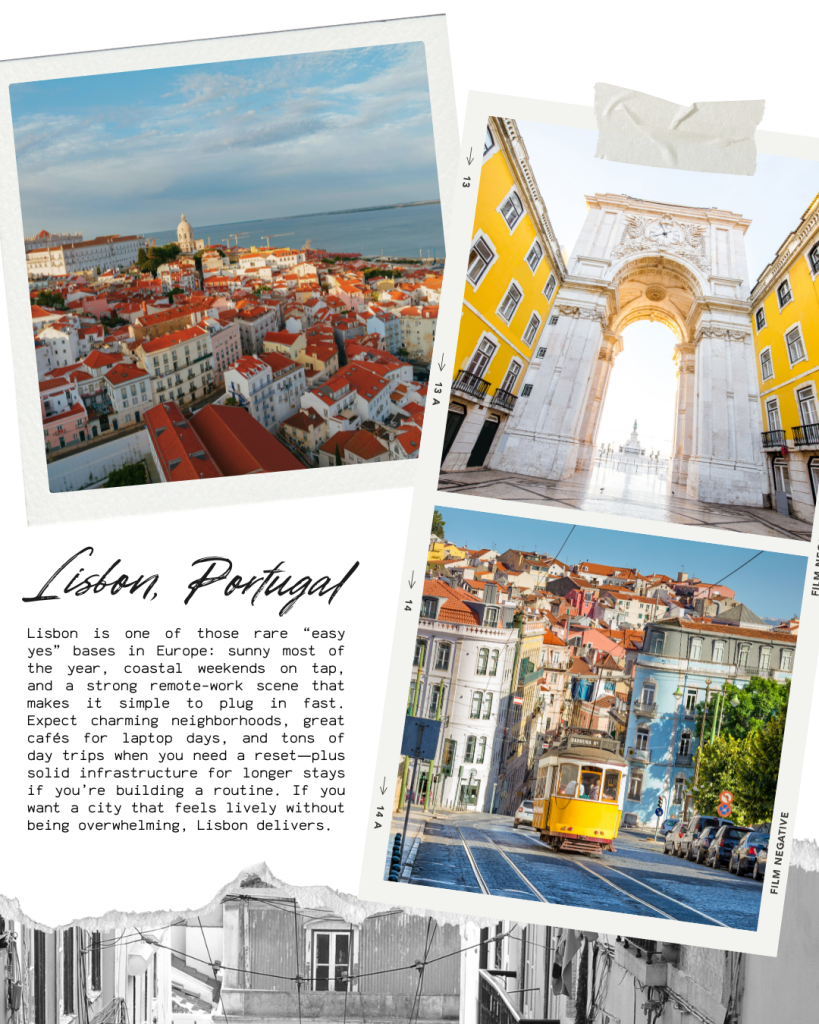
Where to Live (Choose Your Vibe)
Chiado / Baixa
Best for: first-timer ease, walkable “everything close,” easy transit connections
Quick caution: can be busy and a bit touristy; some streets get loud later (worth verifying)
Príncipe Real
Best for: a more polished, local-feeling routine—great cafés, calmer nights, still central
Quick caution: hills and cobblestones; check walking distance to metro for your exact spot (worth verifying)
Campo de Ourique
Best for: “live like a local” energy, strong food scene, good for longer stays and deeper-focus weeks
Quick caution: you’ll transit a bit more for classic sightseeing; choose near your preferred tram/bus routes (worth verifying)
Alcântara / Santos
Best for: riverside walks, easy access to coworking + dining, a balanced routine
Quick caution: some nightlife/traffic pockets; street-by-street noise varies (worth verifying)
Coworking + Café Reality Check
Coworking scene: Deep and nomad-friendly—plenty of well-run spaces across the city, from design-forward hubs to professional, meeting-ready centers. A great rhythm is coworking for call-heavy days and cafés for lighter work.
Café workability: Very good overall (especially mornings). Popular spots fill up quickly; coworking is usually smoother for long calls.
Backup internet plan: Use a Portugal eSIM with generous data so you can hotspot when Wi-Fi is crowded.
Check Out:
Second Home Lisboa — Iconic, plant-filled space inside Time Out Market; great “best all-around” option.
Heden Santa Apolónia — Quieter, design-forward vibe with river views; strong for focused work days.
Impact Hub Lisbon — Community-forward coworking with a strong events/network feel; good if you want people + purpose-driven energy.
IDEA Spaces Saldanha — Bigger, more “full-service” coworking with lots of desks/rooms; solid for meeting-heavy weeks.


What makes it unique (and what to do)
Lisbon is sunlit, tiled, and built on hills—the city’s “thing” is the constant switch between miradouro views, tiny historic streets, and a waterfront that makes daily life feel airy. It’s also a rare capital that feels both old-soul and creative: fado in Alfama, contemporary design and food scenes, and day trips that feel like you changed countries.
Things To Do:
Chase miradouros at golden hour (viewpoints are a core Lisbon ritual—pick 1–2 and make it your “end of day” routine).
Ride Tram 28 (strategically) for the classic Lisbon feel—go early to avoid peak crowds, and keep a close eye on belongings in busy cars.
Wander Alfama for the oldest-neighborhood maze, and pair it with a fado night for the full mood.
Belém half-day: Jerónimos Monastery + Belém Tower, then reward yourself with Pastéis de Belém.
LX Factory for shops, street art, and an easy “workday-to-wander” afternoon.
Best “escape the city” add-on:
Sintra day trip (Pena Palace) — it’s popular enough that buying tickets ahead is the low-stress move (worth verifying timing/availability for your dates).
Good to know
Public transit is legit: metro + buses + iconic trams + funiculars/lifts + ferries
You can live car-free (especially in central neighborhoods)
Heads up: hills + cobblestones can make “short walks” feel longer—comfortable shoes matter.
Summer: warm, sunny, and dry; coastal breezes help
Winter: mild, with more rain and wind—still very “walkable city” weather most days
Lisbon is mid-range in affordability day-to-day, but housing can push it to $$$ fast—especially in the most central neighborhoods and during spring–early fall.
Biggest cost driver: accommodation (location + season + how last-minute you book).
Keep it at affordable: stay 1–3 months, book ahead, consider a slightly less central neighborhood, and cook a few meals at home.