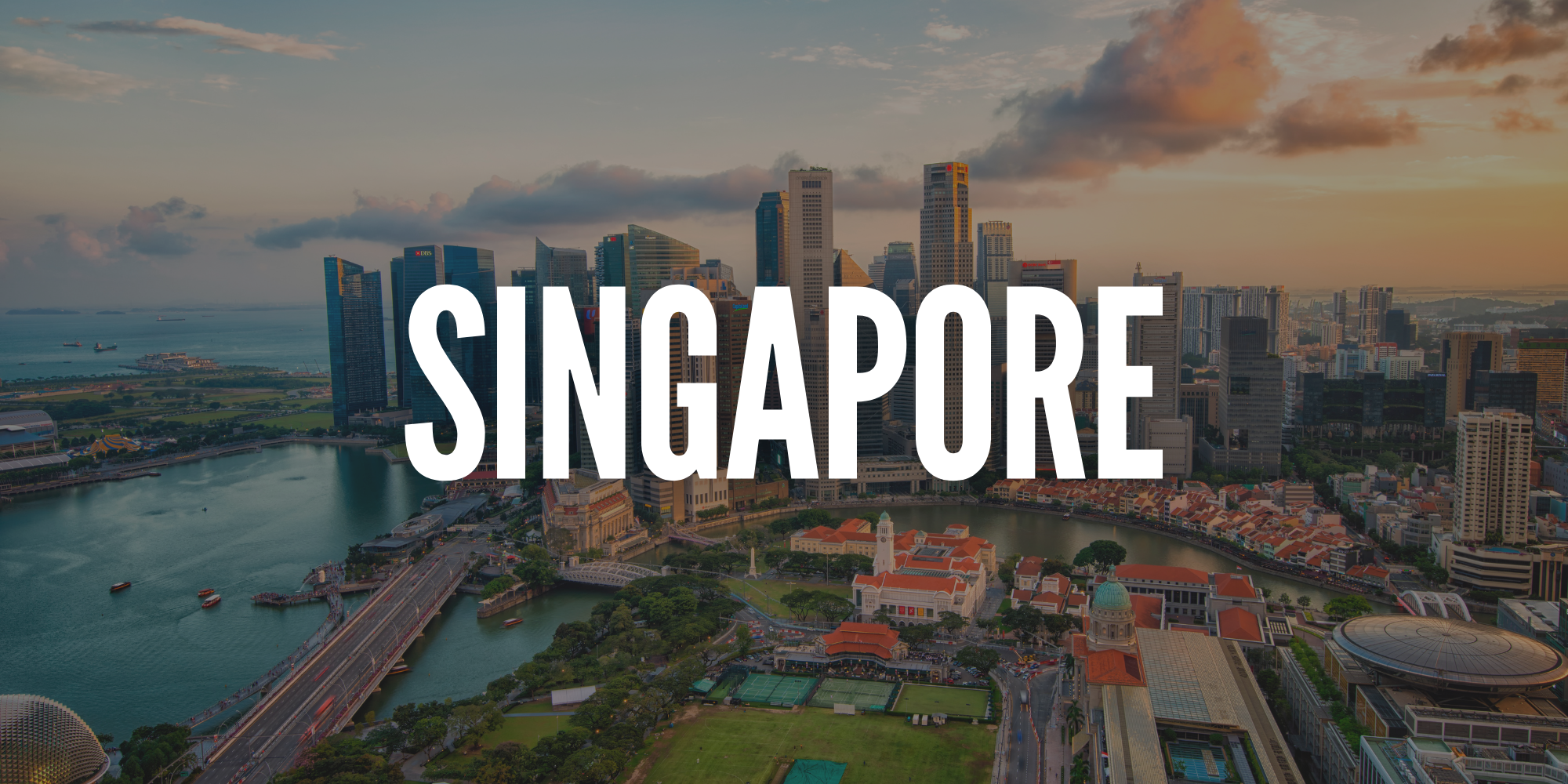
Atlas Snapshot:
Best for: Singapore is a premium “everything works” base—clean routines, dependable transit, and a deep bench of coworking/cafés for serious focus. If you like a polished city that rewards consistency (gym, deep work, great meals, then a night out), it’s a strong fit and generally comfortable in the main neighborhoods people stay—just keep standard big-city awareness in nightlife and crowded areas.
Not great if: If you need a low-cost month or you’re hoping for breezy, dry weather—Singapore is pricey and can feel hot, humid, and rainy depending on the season.
Best stay length: 2–3 months
Singapore Overall Budget: $4,200 per month
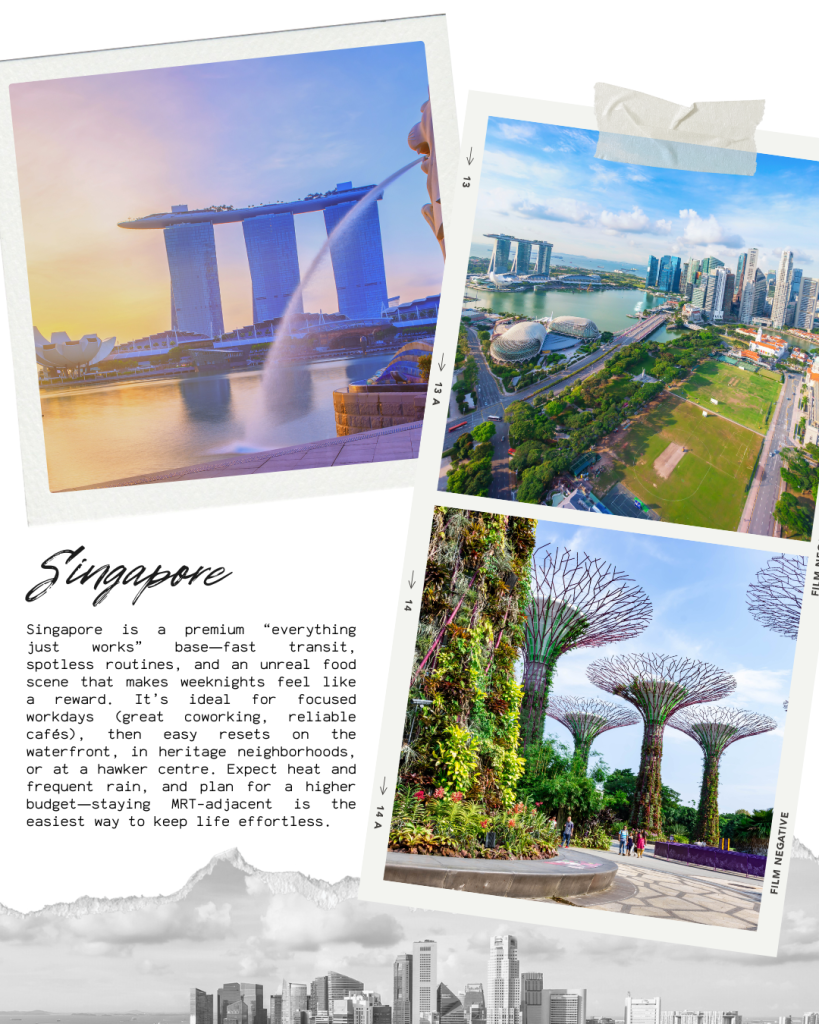
Where to Live (Choose Your Vibe)
Tiong Bahru
Best for: a more “local” feel, café culture, quieter streets, still close to central
Quick caution: limited nightlife on your doorstep; check unit soundproofing in older buildings
CBD / Raffles Place / Tanjong Pagar
Best for: maximum convenience, quick commutes, easy coworking density, skyline energy
Quick caution: can feel corporate and busy; some blocks are dead late-night/weekends
Chinatown
Best for: food, character, central access, a lively-but-liveable vibe
Quick caution: tourist traffic in pockets; some streets run louder at night
Bugis / Kampong Glam (Arab Street area)
Best for: creative/social energy, great eats, central without feeling “pure CBD”
Quick caution: nightlife pockets can get lively—pick a calmer side street if you’re noise-sensitive
Coworking + Café Reality Check
Coworking scene: Singapore is stacked—premium operators, reliable meeting rooms, and multiple central locations so you can choose based on vibe (quiet vs social) without sacrificing convenience. If you take lots of calls, prioritize spaces with phone booths and strong access hours.
Café workability: Very workable for focused sessions—just expect popular cafés to get busy fast. Have a rotation and use malls/hotel lobbies as backup “always open” options.
Backup internet plan: Keep a Singapore eSIM with hotspot enabled so you can fail over instantly during a building Wi-Fi wobble.
Check out:
The Work Project (Capital Tower, CBD) — Premium, polished, great for meetings
WeWork (30 Raffles Place / 60 Anson Rd / Suntec Tower 5) — Best all-around: multiple locations + predictable setup
JustCo (multiple Singapore centres) — Value + lots of locations; good day-pass flexibility
the Hive (Carpenter / North Bridge Road) — Social + community-forward; solid “regular desk” energy
What makes IT unique + things to do
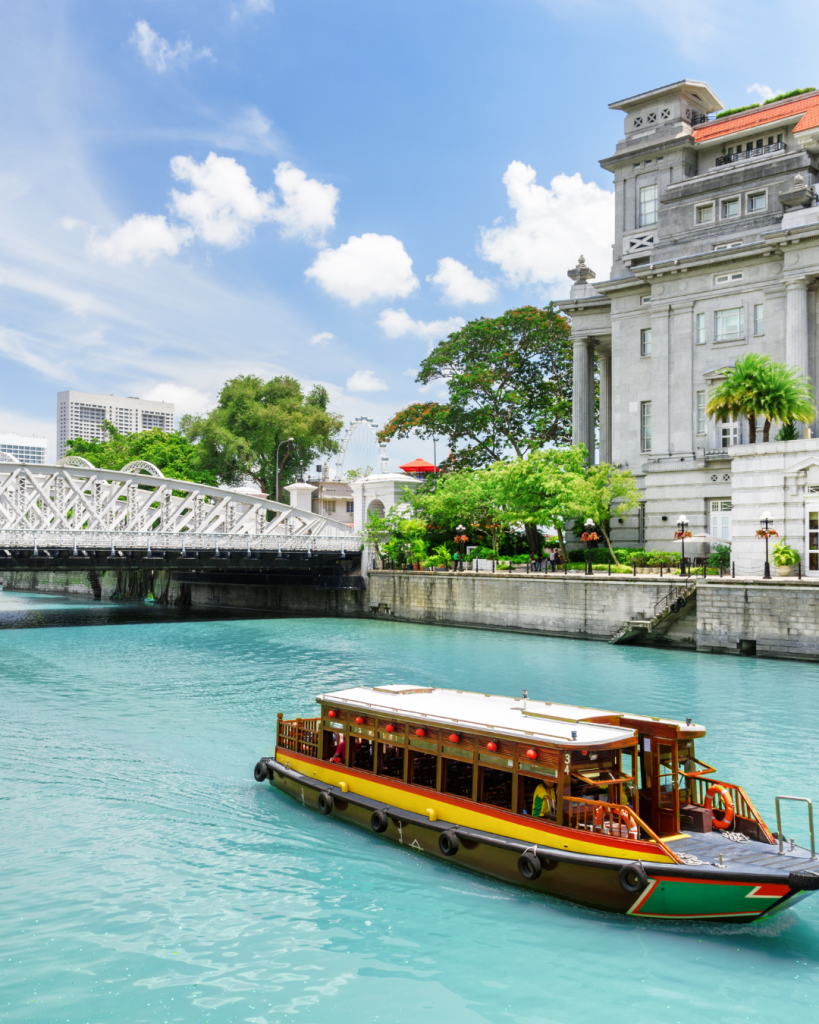
Singapore is a rare “global city in compact form”—efficient transit, serious food culture, and neighborhoods that shift fast from heritage streets to futuristic waterfront. It’s easy to stay productive here because the city removes friction… then rewards you with hawker meals, skyline nights, and greenery that feels surprisingly close.
Things To Do:
Hawker-hop (go with a short list, then freestyle)
Marina Bay walk loop (sunset into night is the move)
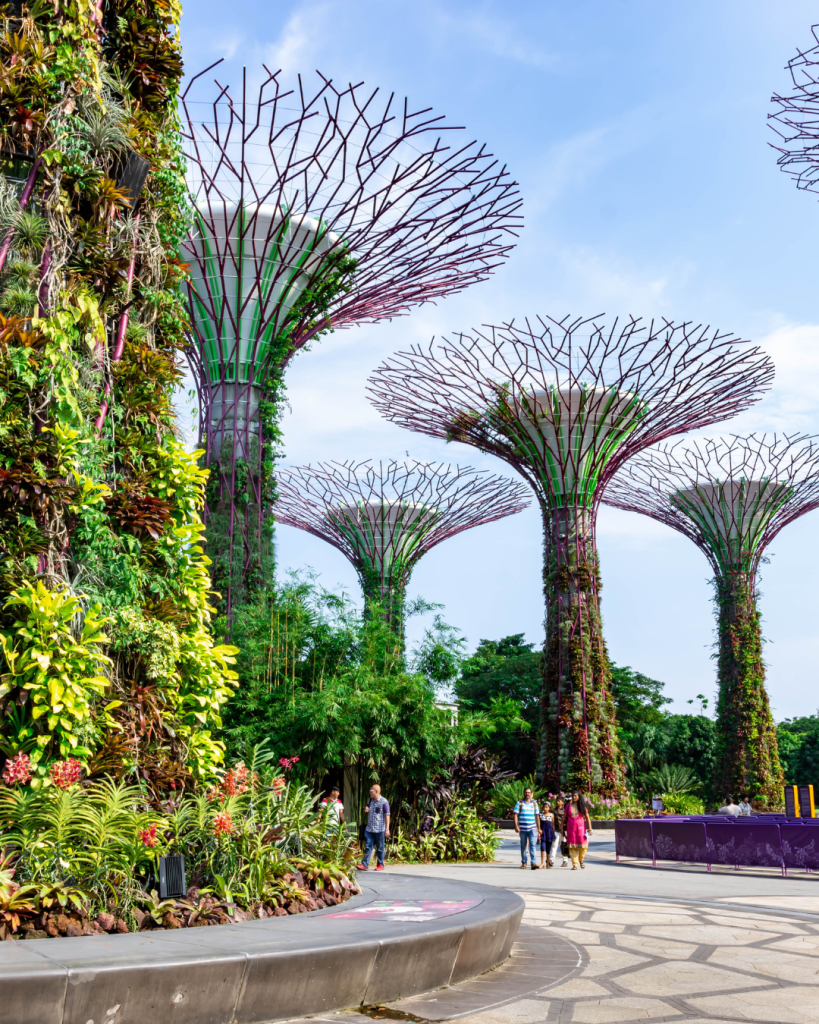
Gardens by the Bay for a low-effort “wow” reset
Explore neighborhood pockets: Chinatown, Kampong Glam, Little India
Day trip feel without leaving the city: Sentosa / beach clubs / coastal walks (conditions vary—stay aware)
Good to know
MRT/LRT is the backbone—pair it with short rideshare hops when rain hits or you’re running late.
Singapore’s climate is shaped by monsoon seasons—Northeast Monsoon (Dec–early Mar) and Southwest Monsoon (Jun–Sep)—so rainfall patterns can change by month.
Singapore is an “expensive, high-value” base—your costs are driven mostly by housing and location. The easiest way to make it feel worth it is to stay MRT-adjacent and choose a place that supports deep work (quiet, good desk, strong A/C).