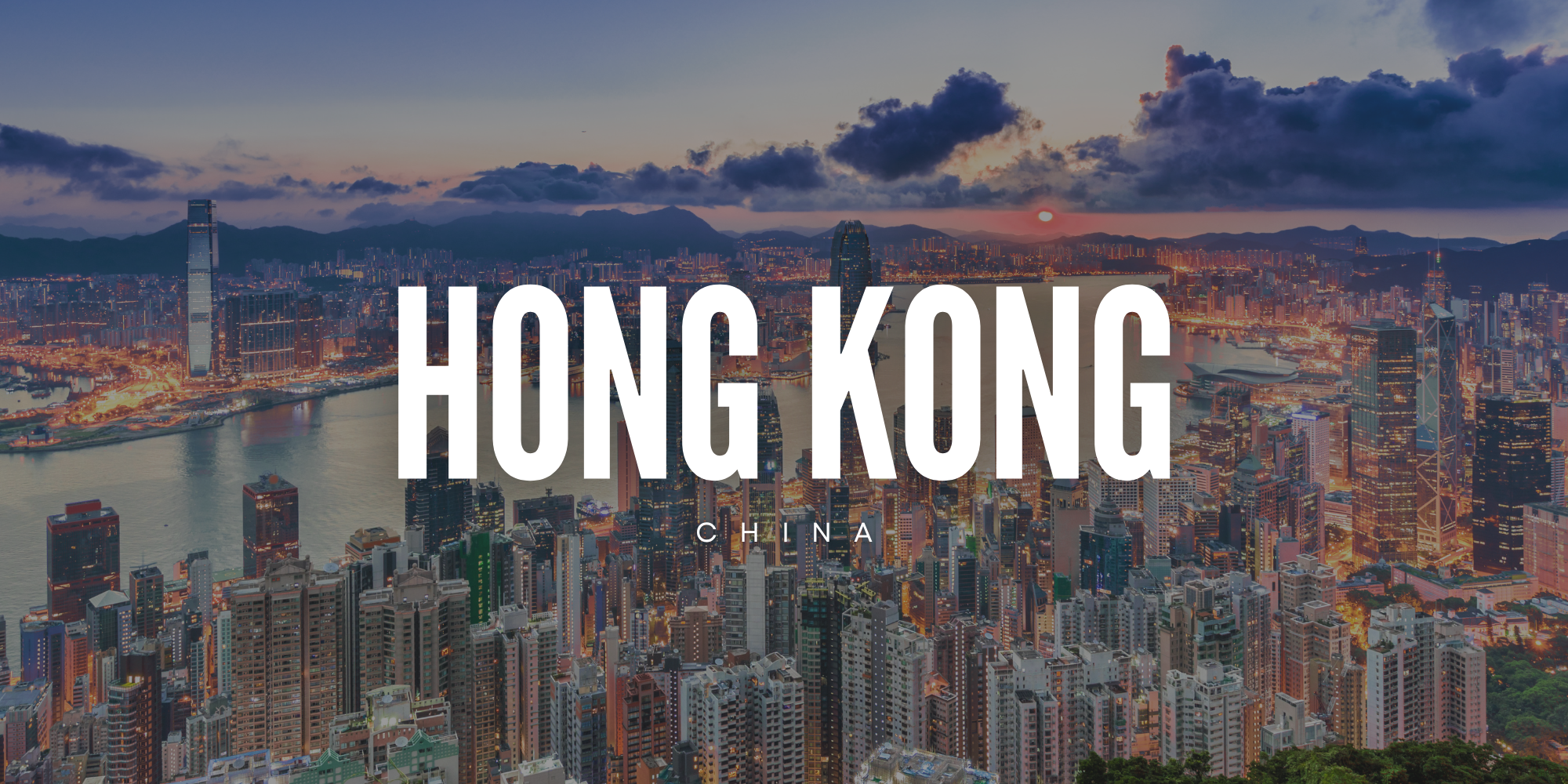
Atlas Snapshot:
Best for: If you want a “plug-in-and-go” city—fast transit, strong work infrastructure, and endless neighborhoods to explore after you close the laptop. Great for deep work and going out, as long as you like a big-city pace.
Not great if: You need lots of living space, a quiet “slow mornings” vibe, or you’re trying to keep costs very low—Hong Kong rewards convenience, but you’ll feel the tradeoffs.
Best stay length: 1 month
Hong Kong Overall Budget: $4,020 per month
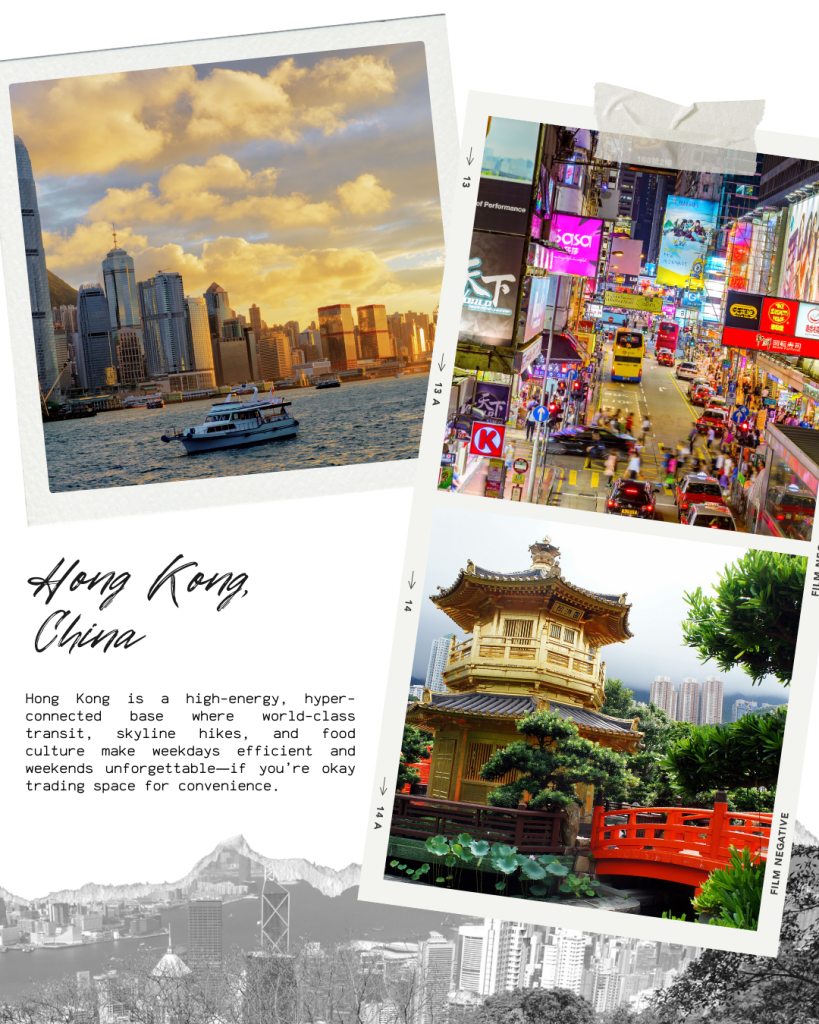
Where to Live (Choose Your Vibe)
Central + Sheung Wan (Old Town Central):
- Best for: walk-everywhere days, café density, galleries/bars, quick access to everything.
- Quick caution: can feel busy; pick a unit with good soundproofing.
Wan Chai:
- Best for: balanced base—easy transit, lots of food options, good “live + work” rhythm.
- Quick caution: some streets get lively at night; check noise notes carefully.
Causeway Bay:
- Best for: shopping, nonstop energy, quick access across the island.
- Quick caution: dense and bright—expect crowds, especially weekends.
Tsim Sha Tsui / Jordan (Kowloon side):
- Best for: harbor walks, late-night eats, easy cross-harbor access.
- Quick caution: touristy pockets + busy main roads—choose side streets for sleep.
Coworking + Café Reality Check
Coworking scene: Strong variety from social hot-desk spaces to polished business lounges—good if you want a consistent routine and a place to take calls without thinking too hard about logistics. Many spots cluster around Central/Sheung Wan and Wan Chai.
Café workability: Plenty of cafés, but seating can be tight and turnover can be quick—have a backup plan for longer work blocks.
Backup internet plan: Bring an eSIM option and a phone hotspot as your “meeting insurance.”
Check out:
theDesk (multiple locations): design-forward, community vibe; good “work all day” option.
The Hive Wan Chai: flexible setups (hot desk → private offices), strong community programming.
The Hive PoHo (Mid-Levels/SoHo area): bright space in a great neighborhood for pre/post-work hangs.
Eaton House (Eaton Workshop, Kowloon): creative-culture energy; nice if you want something less corporate.
What makes IT unique + things to do
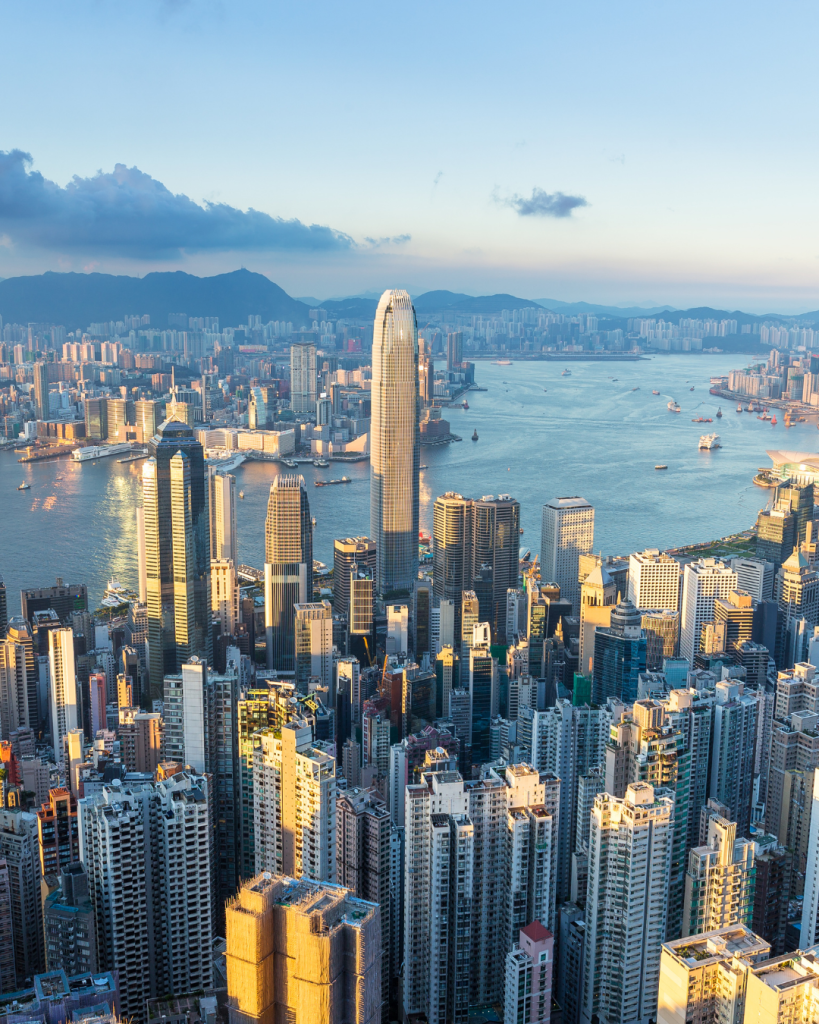
Hong Kong’s magic is the contrast: ultra-vertical city life with beaches, islands, and serious hikes minutes away—plus a food scene that goes from humble chaos to white-tablecloth without changing neighborhoods.
Things To Do:
Take the Star Ferry at golden hour and do a harbor promenade walk.
Hike Victoria Peak routes or pick a coastal trail for skyline-meets-nature days.
Explore Old Town Central for galleries, shops, and bar-hopping.
Do a dim sum + dai pai dong-style eats crawl (go early, go hungry).
Day-trip to outlying islands for beaches/seafood and a different pace.
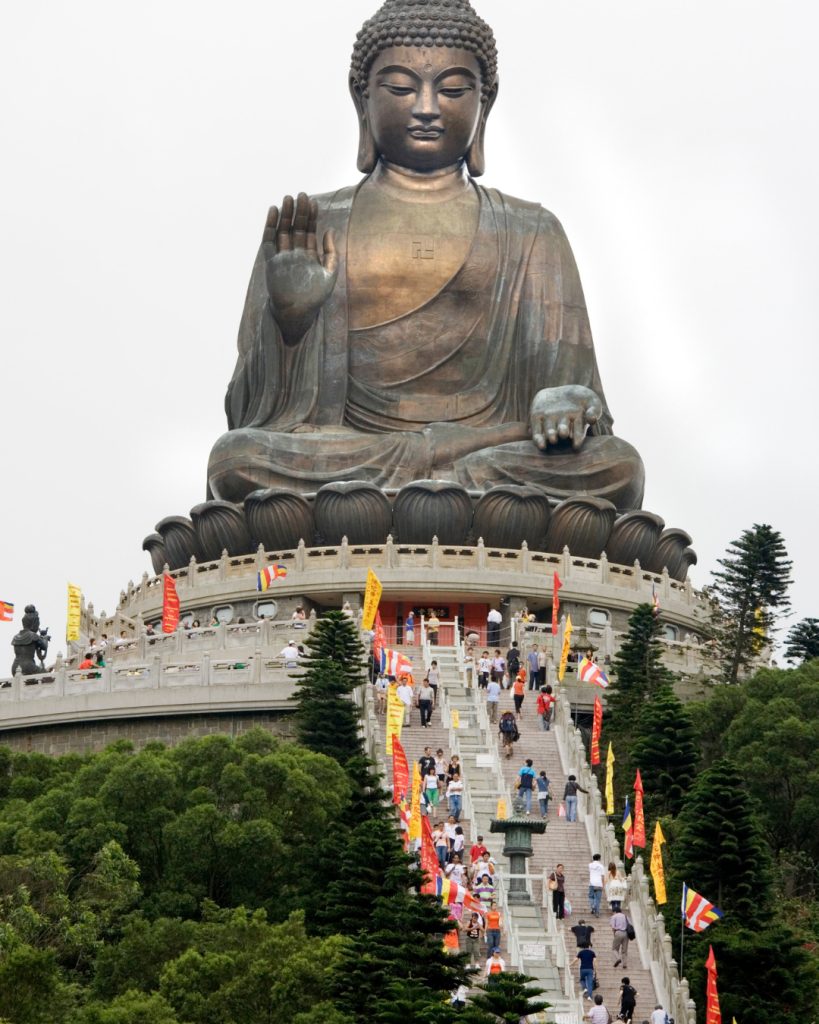
- Visit temples for a calmer, cultural reset—Man Mo Temple (Sheung Wan) is a classic in the city core, and Wong Tai Sin Temple is a popular stop with strong local energy (go earlier to avoid the biggest crowds).
Good to know
Transit is the move—use the MTR as your backbone, then ferries/buses to fill in the gaps.
Spring can be milder but sometimes humid/foggy; summer is hot, humid, and can bring heavy rain—stay weather-aware.
It’s a premium city—optimize by choosing “value neighborhoods,” booking earlier, and deciding what you’re willing to trade (space vs. location vs. amenities).