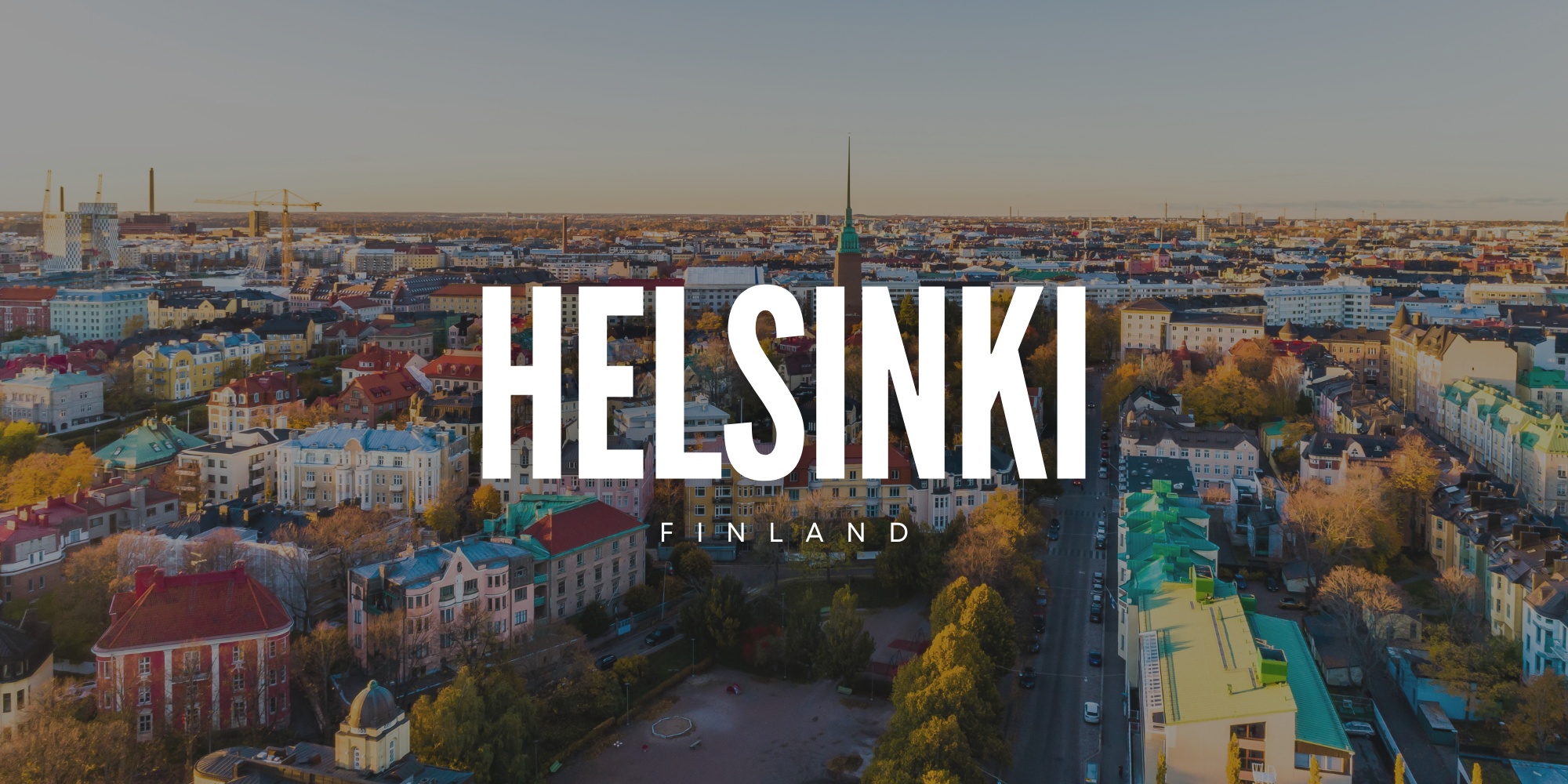
Atlas Snapshot:
Best for: Helsinki is great if you want a clean, design-forward capital where daily life runs smoothly and you can stack deep work with easy “after work” experiences—sauna, waterfront walks, museums, and day trips by ferry. It can feel generally comfortable, but like any city, you’ll want to stay aware late at night around nightlife zones and transit hubs.
Not great if: You’re optimizing hard for low costs, or you need constant warm weather. Winter darkness can be a real factor, and short-term housing can be competitive.
Best stay length: 1 month
Helsinki Overall Budget: $3,050 per month
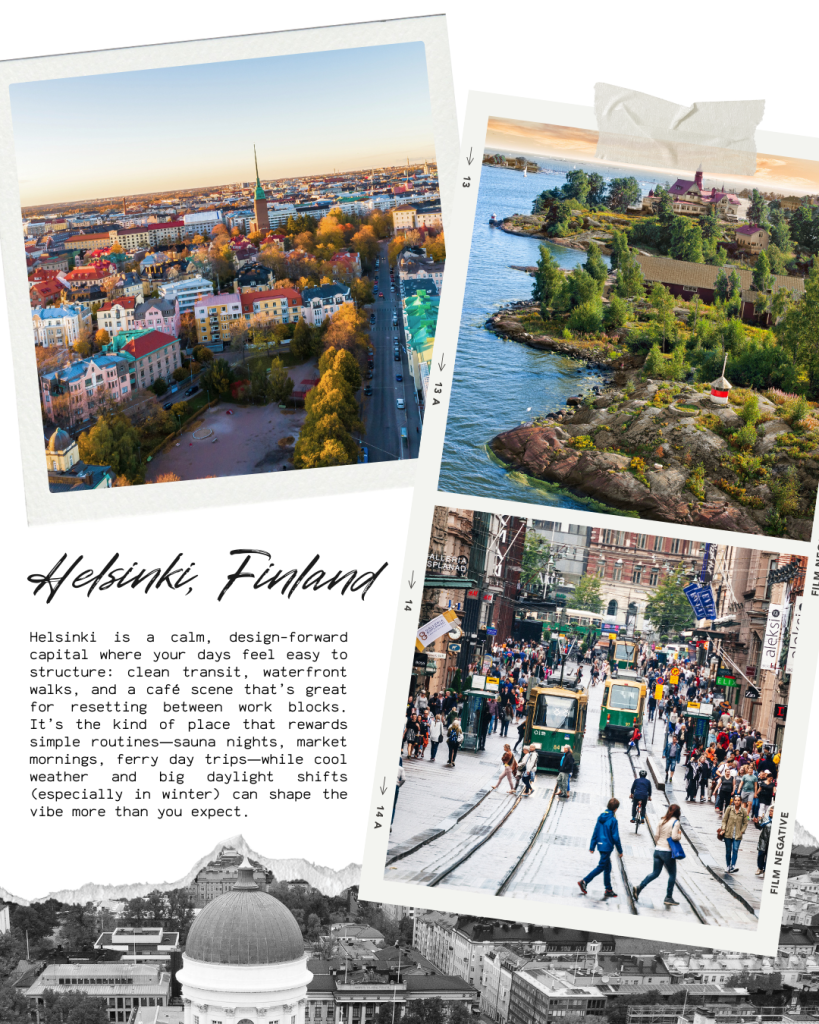
Where to Live (Choose Your Vibe)
Kamppi / City Centre
- Best for: first-timers, easiest logistics, quick access to transit, “do everything on foot” days.
- Quick caution: can be busy and pricier; pick an apartment with good soundproofing.
Punavuori (Design District-adjacent)
- Best for: cafés, boutique gyms, design shops, a premium “live local” feel.
- Quick caution: popular dining streets can run lively at night.
Töölö
- Best for: quieter deep-work routines, parks, museums, and a more residential pace while still close in.
- Quick caution: you may rely on trams more than walking everywhere.
Kallio
- Best for: a more local, creative vibe, casual bars, and good value relative to the center.
- Quick caution: nightlife can mean late-night noise on weekends.
Coworking + Café Reality Check
Coworking scene: Helsinki has a solid spread—from startup-heavy community hubs to polished, premium offices—so you can choose based on whether you want networking or quiet focus.
Café workability: Very doable, especially in central neighborhoods, but peak hours can be crowded and outlets aren’t guaranteed—have a “two-café rotation” plan.
Backup internet plan: Grab a reliable eSIM with hotspot backup so you’re never held hostage by spotty apartment Wi-Fi.
Check out:
Regus – Antinkatu 3D (Kamppi) — Budget / predictable: straightforward day passes and memberships in a super-central spot.
MOW (Mothership of Work) – Punavuori — Best all-around: strong amenities + community, good for full workdays.
Maria 01 – Lapinlahdenkatu 16 — Community / startup energy: great if you like being around builders and events.
Woods – Eteläesplanadi 2 (“Eteläespa 2”) — Premium: polished setting in a prime waterfront/Esplanadi location.
What makes IT unique + things to do
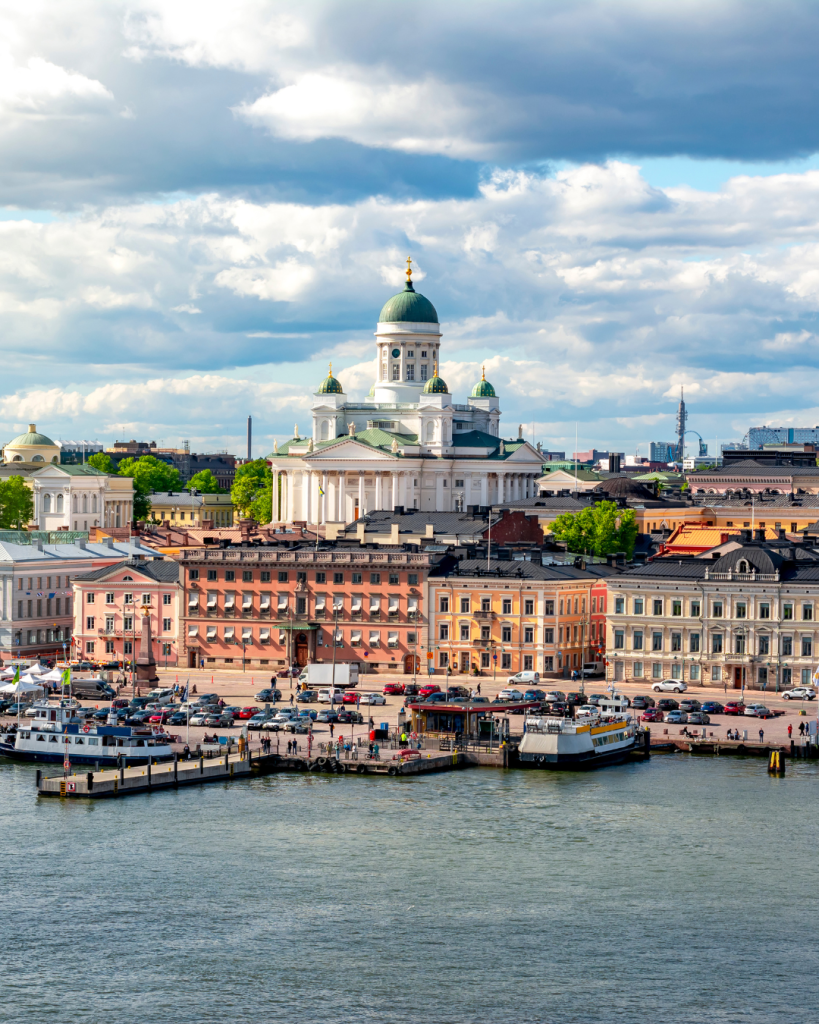
Helsinki’s magic is the mix of sea + design + sauna culture—a capital that feels calm, functional, and quietly stylish. Summer brings long light and waterfront energy; winter leans into cozy rituals and warm spaces.
Things To Do:
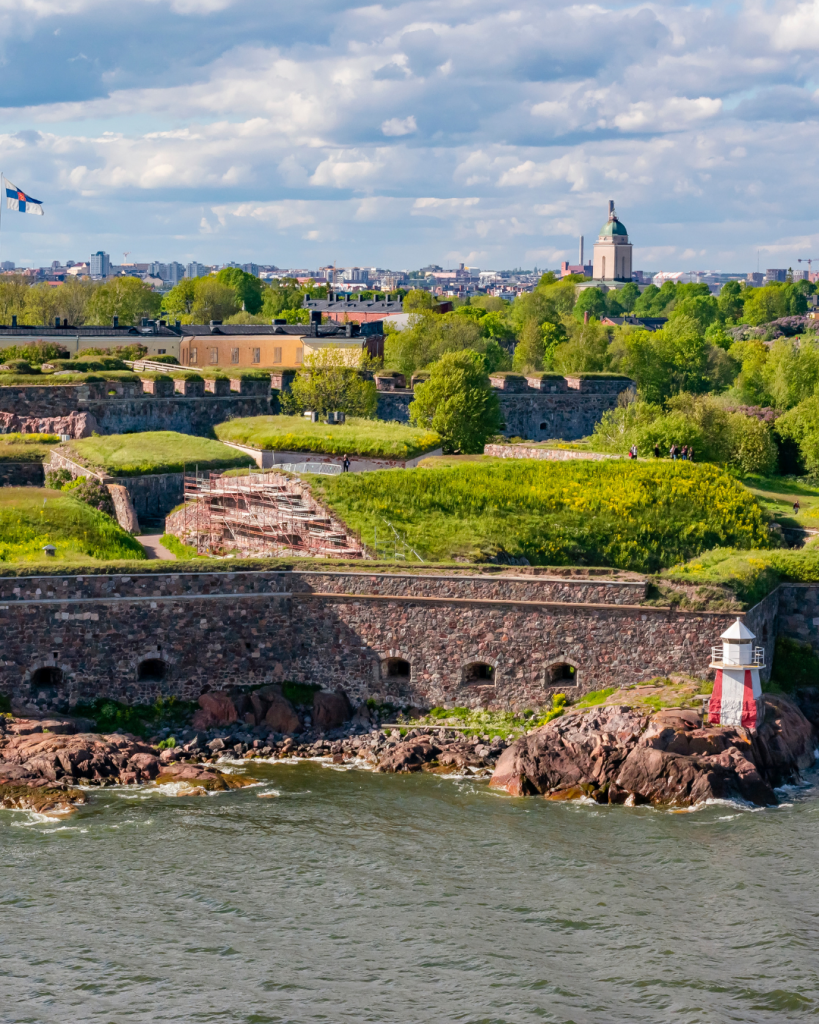
Take the ferry to Suomenlinna for a half-day “historic sea fortress” reset (Pictured left).
Do a proper sauna + dip session at Allas Pool right by the harbor.
Wander the Design District for studios, galleries, and shopping that actually feels local.
Snack your way through Market Square (Kauppatori) and use it as your “start point” for the waterfront.
Good to know
Transit is the easiest default (trams/metro/buses), with walking covering a lot if you stay central. Ferries are part of “normal city life,” not just tourist stuff.
Expect big daylight swings—very long summer days and very short winter days—so plan your routine accordingly (especially if mood/energy is sensitive to light).
Helsinki can add up fast on eating out and spontaneous “little purchases.” If you want it to feel sustainable, prioritize an apartment with a real kitchen, and treat cafés/restaurant meals like curated highlights rather than defaults.