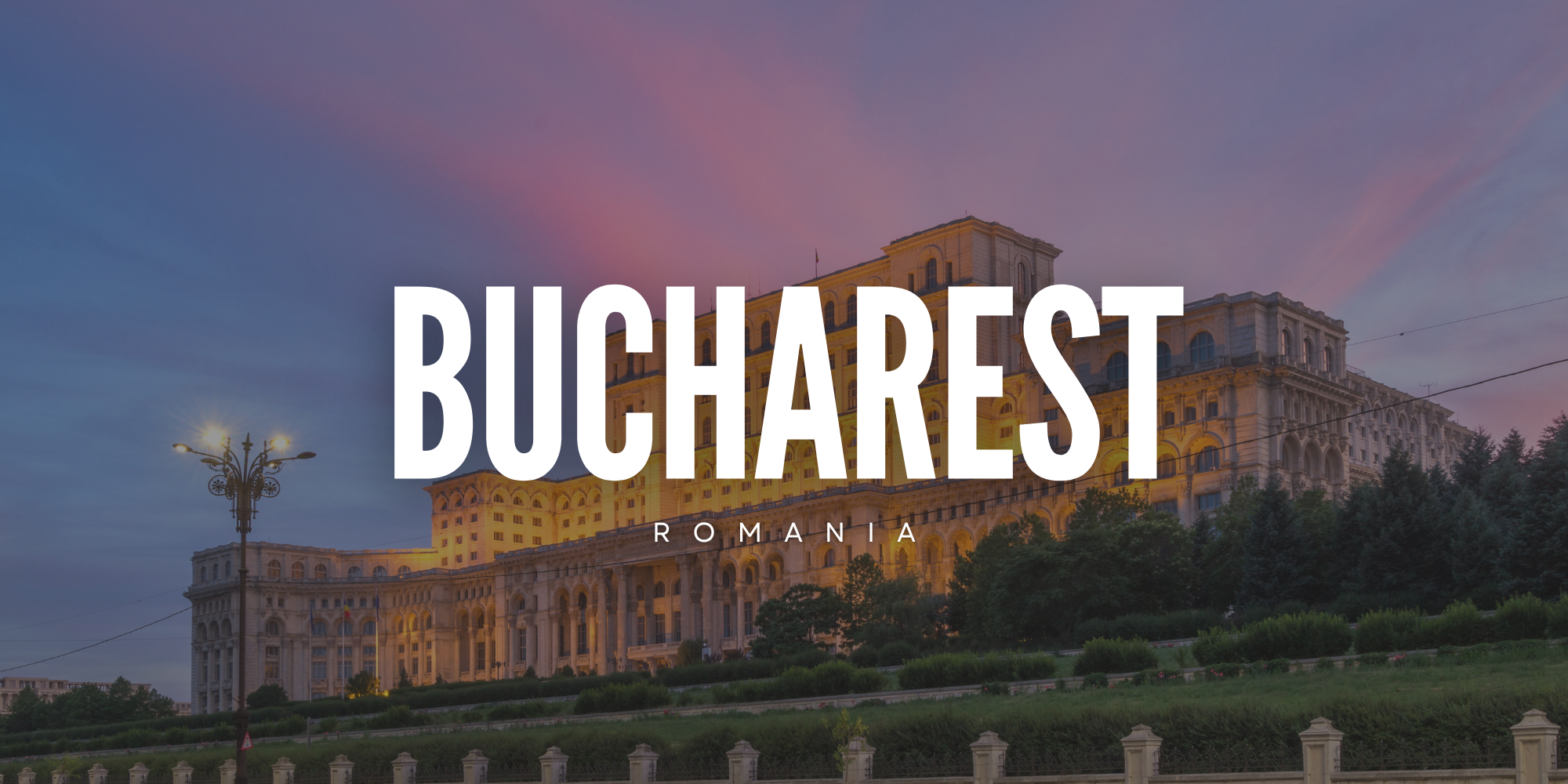
Atlas Snapshot:
Best for: If you want a European capital that’s practical for day-to-day life—solid transit, strong café culture, and plenty of “after work” options—Bucharest delivers. It’s great for nomads who like variety: museums and old streets one day, parks and long dinners the next.
Not great if: If you need a super walkable “everything-at-your-door” city experience, Bucharest can feel spread out. It’s also not ideal if you’re sensitive to nightlife noise—some central streets go late, especially on weekends.
Best stay length: 1 month
Bucharest Overall Budget: $1,855 per month
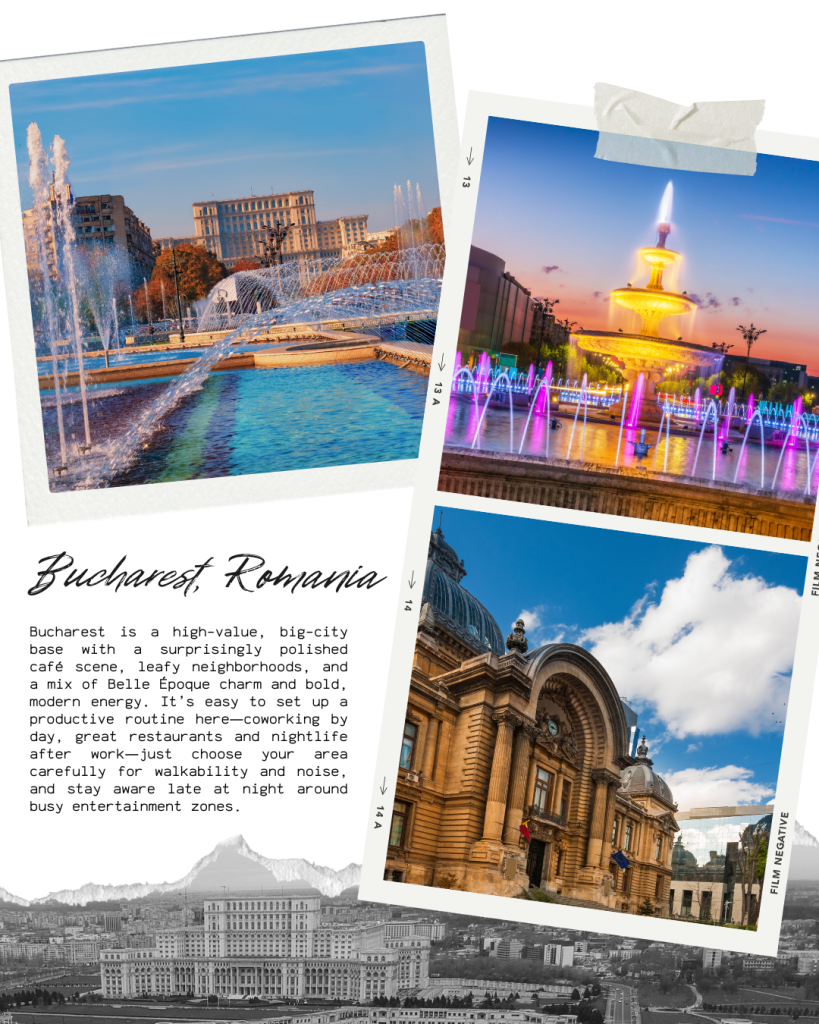
Where to Live (Choose Your Vibe)
Old Town / Lipscani (Centrul Vechi)
Best for: nightlife, short-stay energy, being near major sights
Quick caution: can be noisy late; pick a place with good soundproofing and read recent reviews closely
Universitate / Piața Universității
Best for: central access, quick transit connections, a “hub” feel for exploring the city
Quick caution: traffic and crowds around the square; choose a quiet side street if you’re a light sleeper
Dorobanți / Floreasca
Best for: more polished, residential-meets-restaurant vibe; good for deep work with nicer apartments
Quick caution: you’ll likely rely on transit/rideshares more than walking everywhere (it’s not a compact “old town” base)
Cotroceni
Best for: calmer, local-feeling streets; good if you want “quiet home base” energy
Quick caution: fewer late-night options right outside your door—plan to transit for nightlife/dining
Coworking + Café Reality Check
Coworking scene: Bucharest has a real coworking ecosystem—from community-driven spaces to premium, design-forward offices. The best move is to pick one “anchor” cowork for focus days and rely on cafés on lighter days.
Café workability: Strong overall, especially in central zones—just expect busier hours and occasional limited outlets. Weekdays earlier in the day tend to be more laptop-friendly.
Backup internet plan: Use a local eSIM with hotspot capability so you’re not stuck if your apartment Wi-Fi is flaky.
Check out:
Impact Hub Bucharest — Best all-around: community, events, flexible coworking options
Commons Unirii — Best for central + social: easy to pair with city days; popular cowork vibe
Mindspace Victoriei — Premium pick: polished, hospitality-style workspace in a central area
Hotspot Workhub — Great for teams / premium-flex: upscale flexible offices with coworking membership options
What makes IT unique + things to do
Bucharest’s charm is contrast: elegant historic boulevards and cafés alongside massive, history-heavy architecture, all wrapped in a city that feels more “lived-in” than curated. It’s a great place to settle into routines—morning park walks, focused work blocks, and long evenings that can swing from wine bars to classical music.
Things To Do:
Walk Calea Victoriei for architecture + café hopping
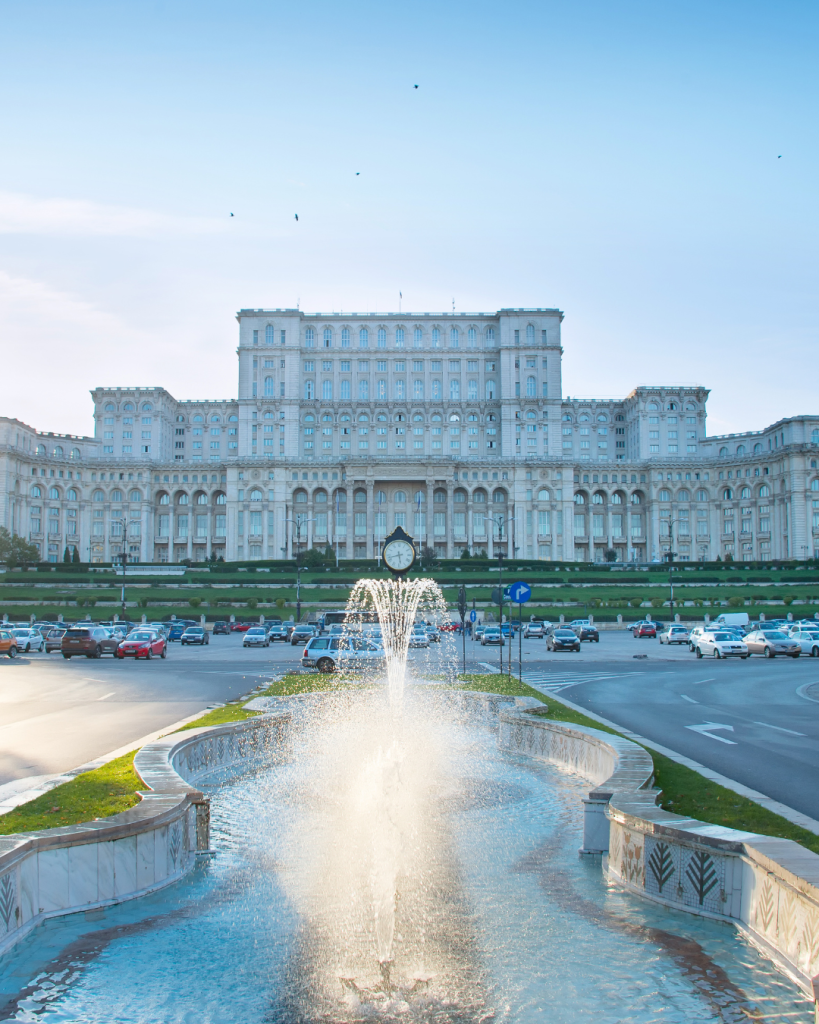
Visit the Palace of the Parliament for a “only in Bucharest” scale moment
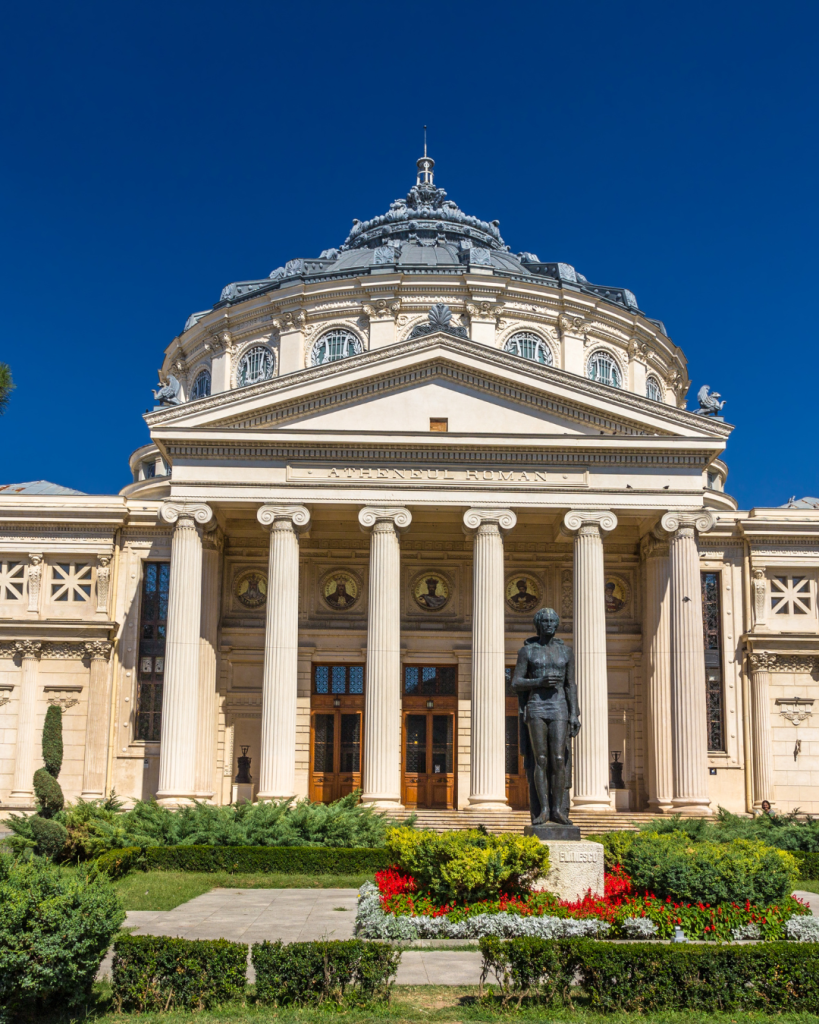
Catch a concert at the Romanian Athenaeum if you’re into classical (Pictured Left).
Do a Therme București day (popular reset day—worth verifying timing/transport)
Explore neighborhoods beyond the center (Dorobanți/Floreasca for dining; Cotroceni for a quieter feel)
Good to know
Transit is usually the easiest day-to-day (metro + surface transport), with rideshares filling gaps late-night or across neighborhoods. If you stay central, you can walk plenty—just expect longer hops between “clusters.”
Four seasons. Summers can get hot and humid, while winters are cold and can be snowy. Spring and fall tend to feel the most comfortable for walking-heavy days.
Compared to many Western European capitals, Bucharest often feels more budget-friendly for daily life. The main “budget swing factors” are neighborhood choice, apartment quality (new build vs. older stock), and how often you rely on rideshares vs transit.