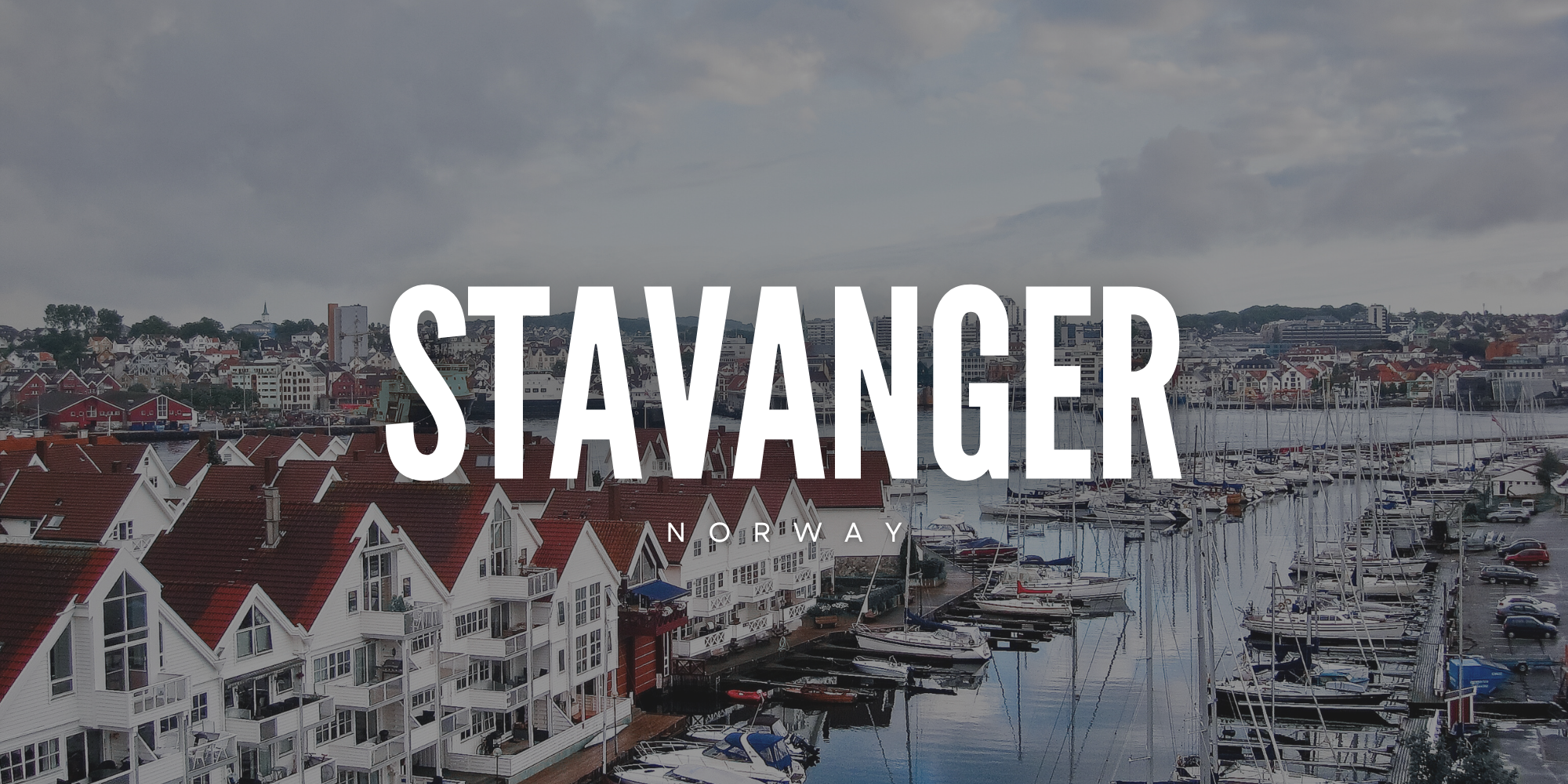
Atlas Snapshot:
Best for: If you want a calm-but-not-boring coastal city with quick access to dramatic nature, Stavanger is a strong pick. The center is compact, cafés are easy to fold into a workday, and weekends can be all fjords, hikes, and harbor wandering—without feeling like you’re living in a theme park.
Not great if: If you’re very budget-sensitive, Norway can feel like a constant “small costs add up” situation. It’s also a cooler, windier vibe than many people expect—great for crisp air lovers, less ideal if you’re chasing heat.
Best stay length: 1 month
Stavanger Overall Budget: $3,370 per month
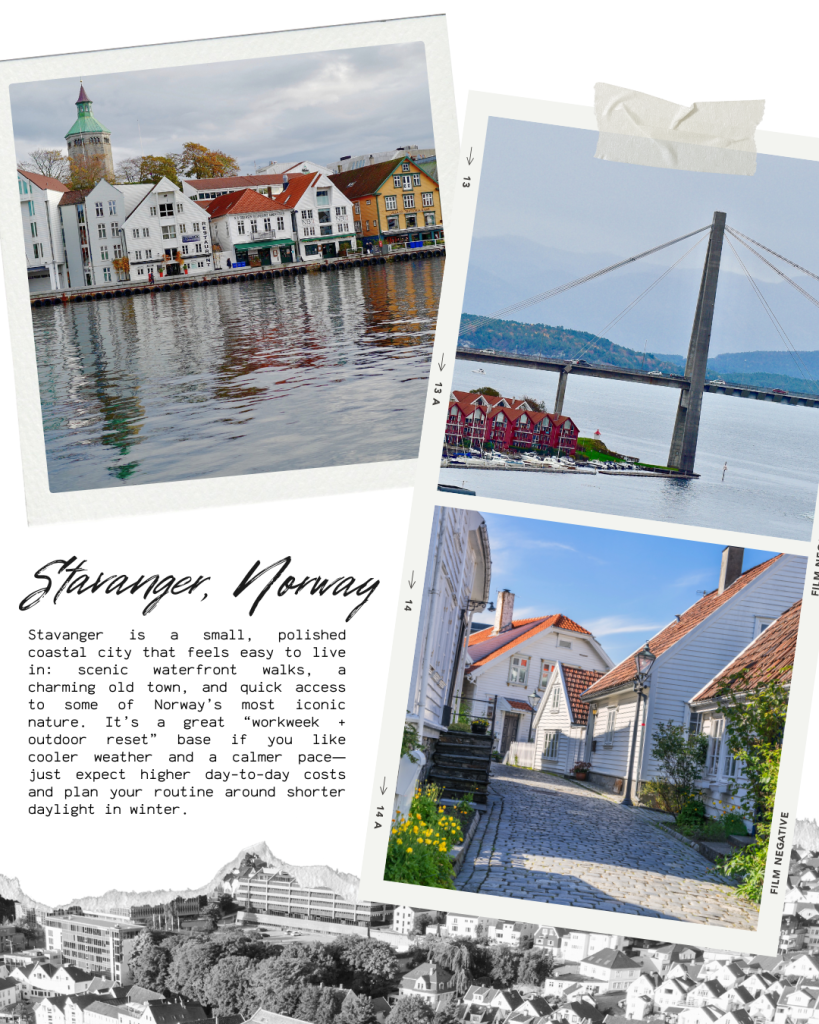
Where to Live (Choose Your Vibe)
Sentrum / Vågen (Harbor + core center)
Best for: walk-everywhere convenience, cafés, restaurants, easy transit links, quick access to the waterfront.
Quick caution: it can get lively and noisier near the harbor on weekends—choose your street carefully.
Gamle Stavanger + Bjergsted area (Old Town edge + arts/culture feel)
Best for: charming, slower-paced mornings, scenic walks, and a more “local neighborhood” feel close to the center.
Quick caution: charming streets often mean older buildings—sound insulation and stair access can be worth verifying.
Våland / Eiganes (residential, close to parks and center)
Best for: quieter sleep, longer-term stay comfort, still a reasonable walk/bus into the action.
Quick caution: you may trade a bit of nightlife convenience for calm—plan for evenings to be more low-key.
Storhaug (east of center, more local texture)
Best for: a less touristy, everyday-city feel while staying close to downtown.
Quick caution: block-by-block vibe can vary—do a street view scan and check late-night walk routes.
Coworking + Café Reality Check
Coworking scene: Stavanger’s coworking ecosystem is smaller than mega-hub cities, but it’s legit—especially around the center and business clusters. Expect professional spaces geared toward startups, teams, and flexible drop-ins rather than huge nomad compounds.
Café workability: Very doable for lighter work blocks; for deep work, you’ll probably prefer a coworking day pass once or twice a week.
Backup internet plan: Use an eSIM with hotspot capability as your “hotel Wi-Fi insurance,” especially if you’ll take calls.
Check out:
Innoasis (Stavanger) — Budget-friendly drop-in (day pass format; easy for a single focused workday).
Innovation Dock (Stavanger) — Best all-around / community (strong ecosystem vibe; great if you like being near founders and events).
Vingtor Arbeidsbar — Social + work-friendly (a “work bar” concept that’s great if you want some ambient energy and a more casual setup).
Regus (Stavanger) — Premium-flexible (useful if you want predictable amenities and bookable workspace options).

What makes IT unique + things to do
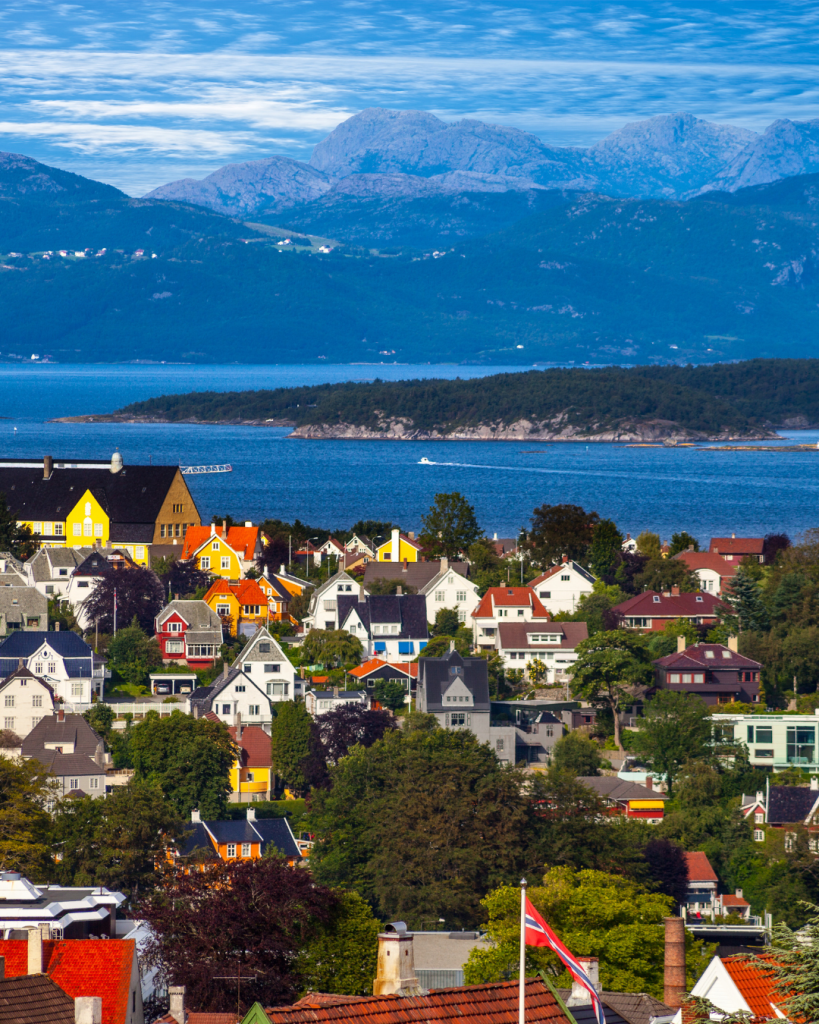
Stavanger feels like a gateway city: a polished harbor and compact center on one side, and quick access to rugged coastal landscapes on the other. It’s the kind of place where you can do a solid workweek, then flip into “fjord mode” with minimal planning.
Harbor strolls around Vågen (easy, scenic, and perfect for a decompression walk).
Explore Gamle Stavanger for classic streets + photo-friendly wandering.
Day trip to the fjords — book a guided fjord cruise or a fjord-and-hike combo depending on the season (routes and operators vary, so it’s worth verifying what’s running during your dates).
Museum/arts stops and cozy café hopping when the weather turns.
Take a boat-style activity from the harbor area when conditions are good (availability varies—worth verifying).
Good to know
Walking covers most of the center. For anything beyond that, buses are the practical default—grab the Kolumbus app(s) for tickets and routing.
Expect a cool coastal feel with a real chance of rain and wind—layers and a rain shell make the day smoother.
Norway tends to run expensive day-to-day. To keep it comfortable, prioritize a place with a real kitchen, choose neighborhoods that reduce transport friction, and plan a few “splurge meals” rather than defaulting to eating out constantly.