Atlas Snapshot:
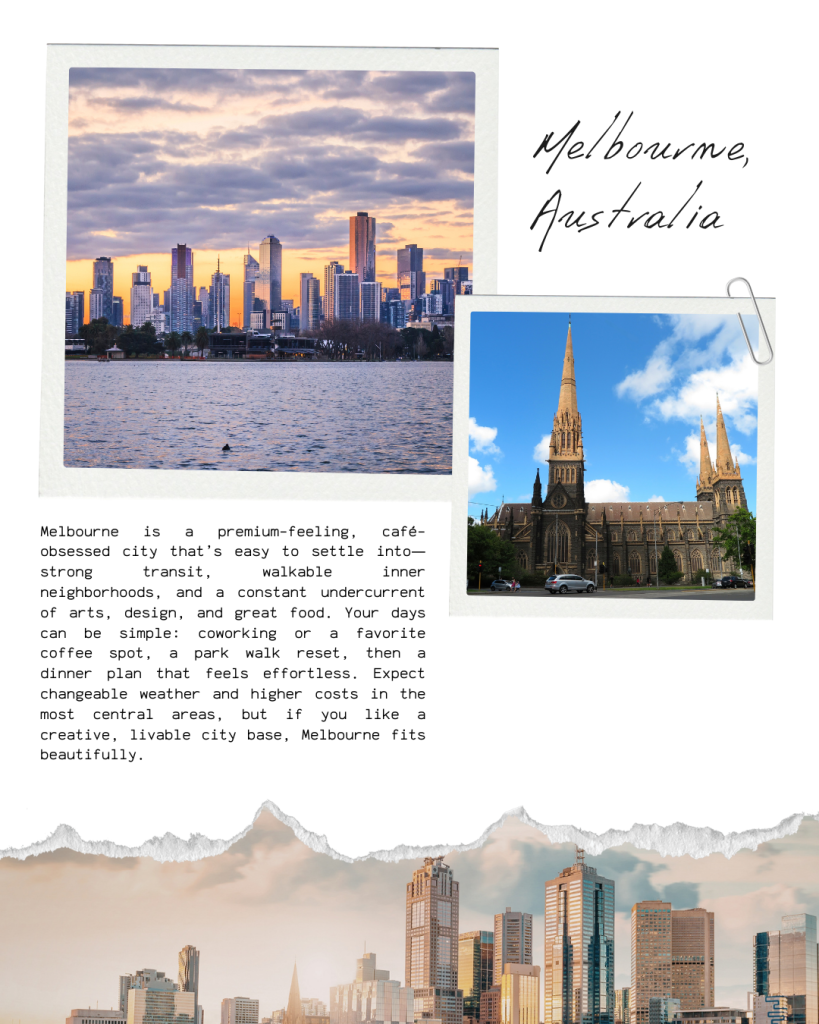
Best for: If you love café culture and want a premium, livable city that’s easy to settle into—work blocks, a park walk, then a great dinner without needing a big plan. It’s especially good if you like creative energy (galleries, design, live music) as your default backdrop.
Not great if: You want predictable weather or a fully car-free life outside the core. The city can feel spread once you’re beyond the inner neighborhoods, and weather swings can affect your day—worth planning with layers.
Best stay length: 1–3 months
Where to Live (Choose Your Vibe)
CBD (Central Business District)
Best for: maximum convenience, transit access, easy coworking rotation
Quick caution: can feel busy; some streets get loud later—choose your exact block carefully
Fitzroy
Best for: creative/social energy, bars + restaurants, “walk out your door and it’s fun” living
Quick caution: nightlife can run late in pockets—worth verifying noise if you’re a light sleeper
Carlton
Best for: slightly calmer “local” feel near the center; great food and leafy walks
Quick caution: student energy near the university area; noise varies street-to-street
South Yarra
Best for: polished, comfortable base with great shopping/gyms and quick access into the city
Quick caution: can skew pricier; pick close-to-transit if you want fewer rides
Coworking + Café Reality Check
Coworking scene: Melbourne’s coworking ecosystem is deep—plenty of premium spaces, meeting-ready setups, and consistent “show up and focus” options. The main decision is vibe: corporate-polished vs creative-community.
Café workability: Excellent—coffee culture is a real lifestyle here. For long calls, coworking is usually smoother, and popular cafés can get busy quickly.
Backup internet plan: Keep an eSIM + hotspot option so you can pivot if café Wi-Fi is crowded.
Check out:
Hub Australia (Collins Street) — Premium, polished inner-city workspace that’s great for deep work and meetings.
WeWork (Melbourne CBD / Docklands locations) — Reliable “default” option with multiple sites and day-pass access.
The Commons (Collins Street) — Creative, design-forward environment with a premium community feel.
Inspire9 (Richmond) — Bright, community-driven space (often popular with creatives and startups).
What makes IT unique + things to do
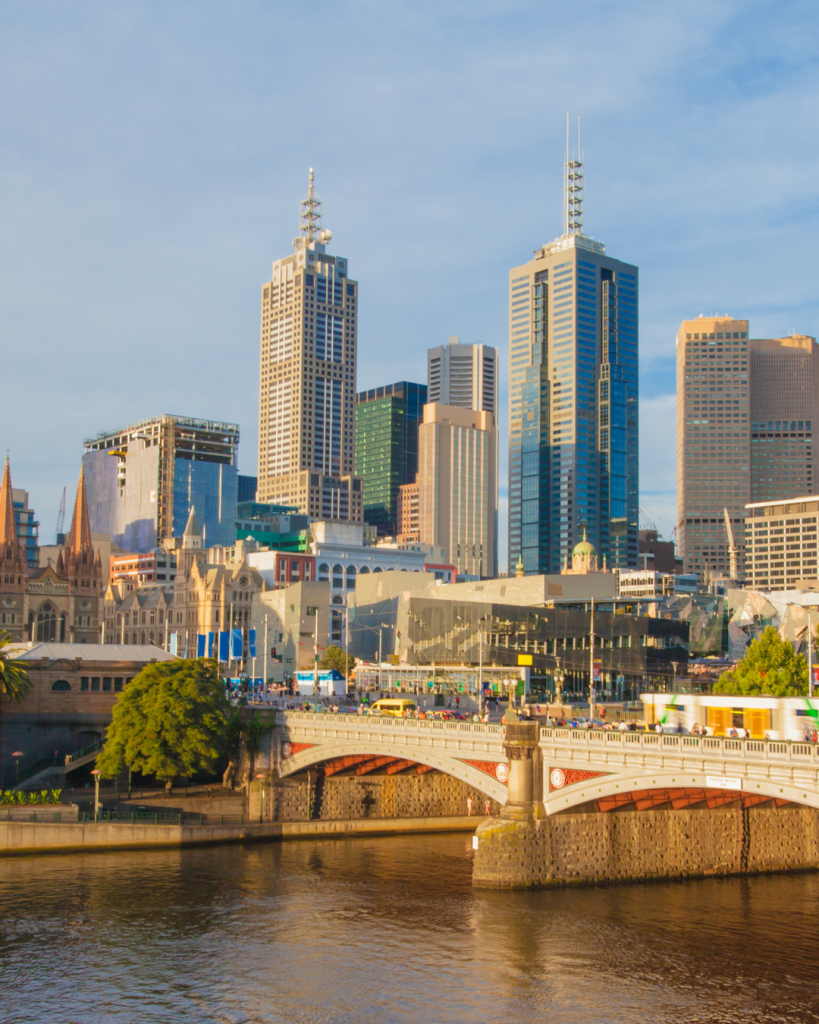
Melbourne’s uniqueness is how livable it is for ambitious weeks: world-class coffee and food, strong arts culture, and neighborhoods that each feel like their own mini-city. It’s a place where your routine becomes the highlight—one great café, one park loop, one “always hits” dinner spot—then you layer in galleries, live music, and day trips when you want more.
Things To Do:
Do a “CBD wander” day: laneways, coffee, galleries, repeat (go earlier if you prefer it calmer)
Sunset viewpoint + picnic in the Royal Botanic Gardens (timing/entry details worth verifying)
Take a Yarra River walk and let it reset your brain between work blocks
Pick one neighborhood night (Fitzroy or Carlton are easy bets) and do a low-effort food crawl
Catch live music or comedy—Melbourne’s calendar is strong (what’s best is worth verifying week-to-week)
If you need an “out of the city” weekend: Great Ocean Road / Yarra Valley are common picks (logistics worth verifying based on season)
Good to know
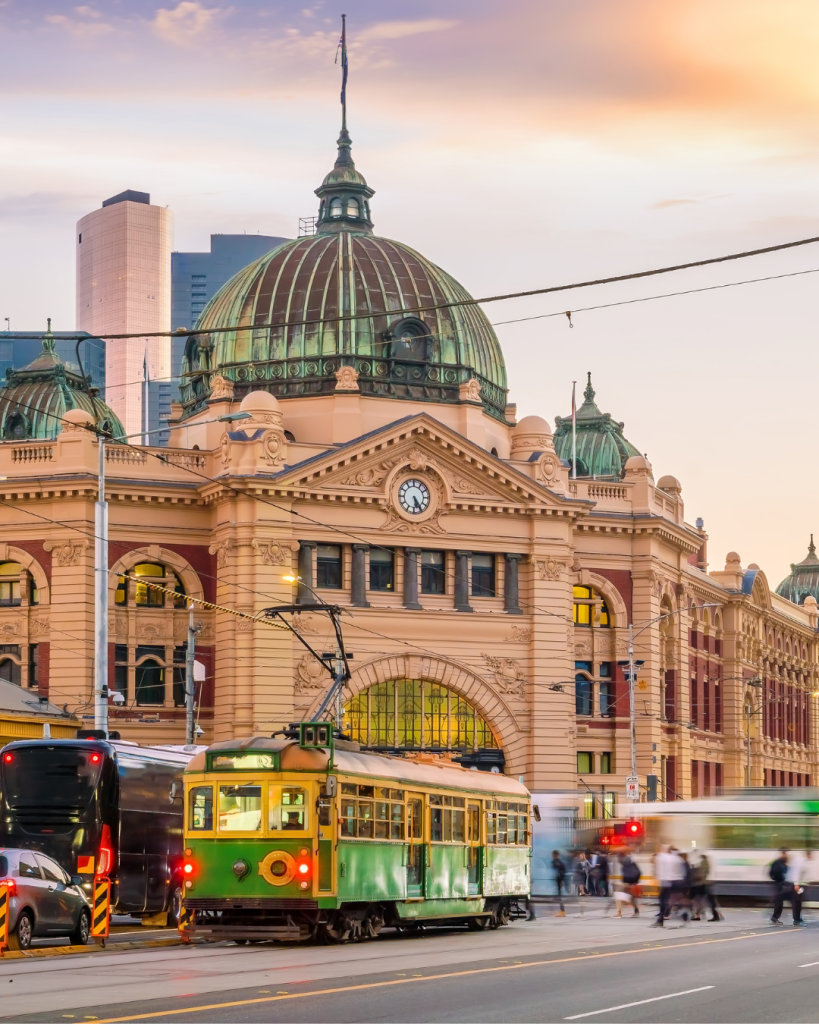
Inner Melbourne is very doable without a car: trams/trains plus walking handle most routines. If you’re staying outside the core, you may mix in rides—especially at night.
Temperate/oceanic and famously changeable—layers and a light rain plan go a long way.
Accommodation is the biggest swing factor. If you want a more stable spend, stay inner-city but one step off the busiest streets, and use coworking selectively (a few deep-work days; cafés for lighter sessions).