Atlas Snapshot:
Best for: If you want a value-friendly Asia base with deep food culture and a walkable heritage core you can loop daily. It’s great for building a simple rhythm: coworking or café in the morning, exploring in short bursts, then a hawker dinner as the default plan.
Not great if: You need a super-polished, ultra-modern city feel, or you want to walk everywhere without dealing with heat/humidity. If you’re sensitive to noise, choose your street carefully in the busiest parts of the core (it can stay lively).
Best stay length: 2–6 weeks
Where to Live (Choose Your Vibe)
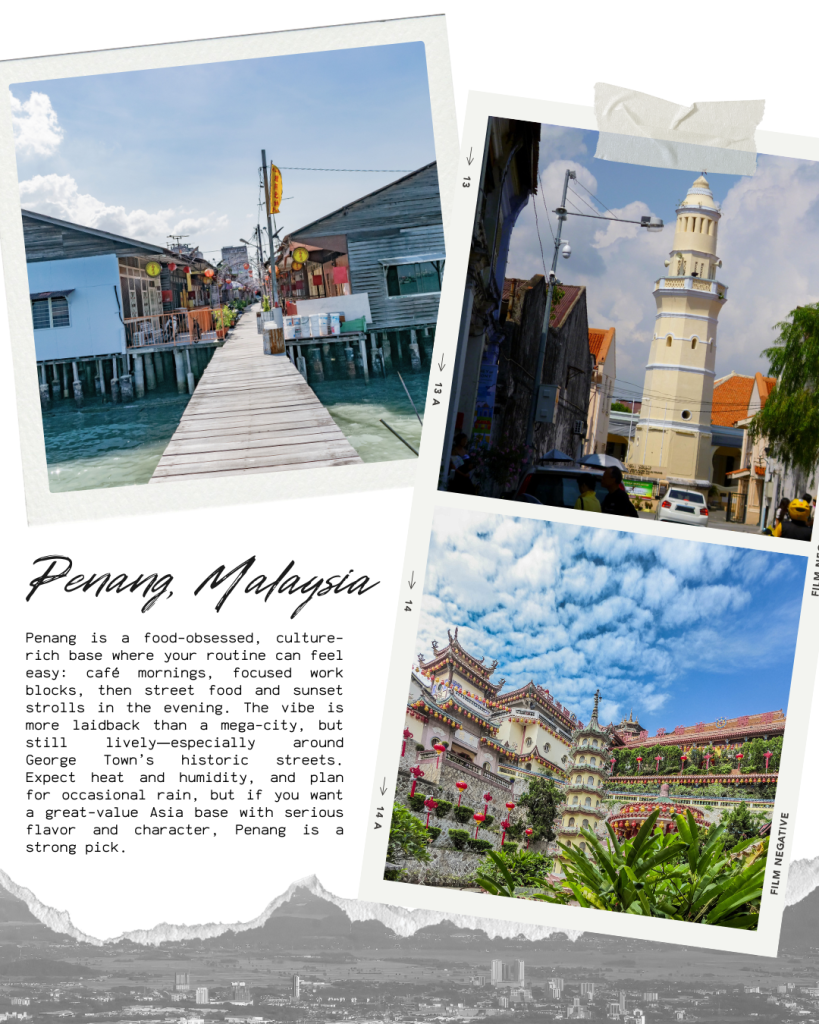
George Town UNESCO World Heritage Site (heritage core)
Best for: maximum charm + walkability, culture, food access, first-timer ease
Quick caution: can be busy/noisy; some older buildings vary a lot in comfort and soundproofing (worth verifying)
Pulau Tikus / around Gurney (more “daily life” convenient)
Best for: a smoother, more residential routine with easy access to shops + cafés
Quick caution: less of the “storybook heritage” right outside your door; you’ll commute in for the old-town vibe
Tanjung Tokong
Best for: a calmer base that’s still connected; good for longer stays
Quick caution: you’ll rely more on ride-hailing/buses vs. walking everywhere
Batu Ferringhi (beach-side option)
Best for: beach reset energy and slower mornings
Quick caution: more touristy + farther from coworking/heritage routines (commute time worth verifying)
Coworking + Café Reality Check
Coworking scene: Penang has enough solid coworking choices to build a dependable workweek—especially around George Town and the Gurney/Pulau Tikus area. A good rhythm is coworking for calls/deep work, then cafés for lighter admin days.
Café workability: Very workable, especially mornings. For frequent calls, coworking is usually more consistent (cafés can get busy and noisy).
Backup internet plan: Use a Malaysia eSIM with generous data so you can hotspot if Wi-Fi is inconsistent.
Check out:
Settlements — Great “best all-around” pick in central George Town; practical setup for focused days.
Common Ground (Penang) — More premium, polished space in Pulau Tikus; good if you want a sleek, meeting-friendly vibe.
MASCO Co-working Space — Strong budget-friendly option (Prangin Mall); straightforward “get it done” desk days.

What makes IT unique + things to do
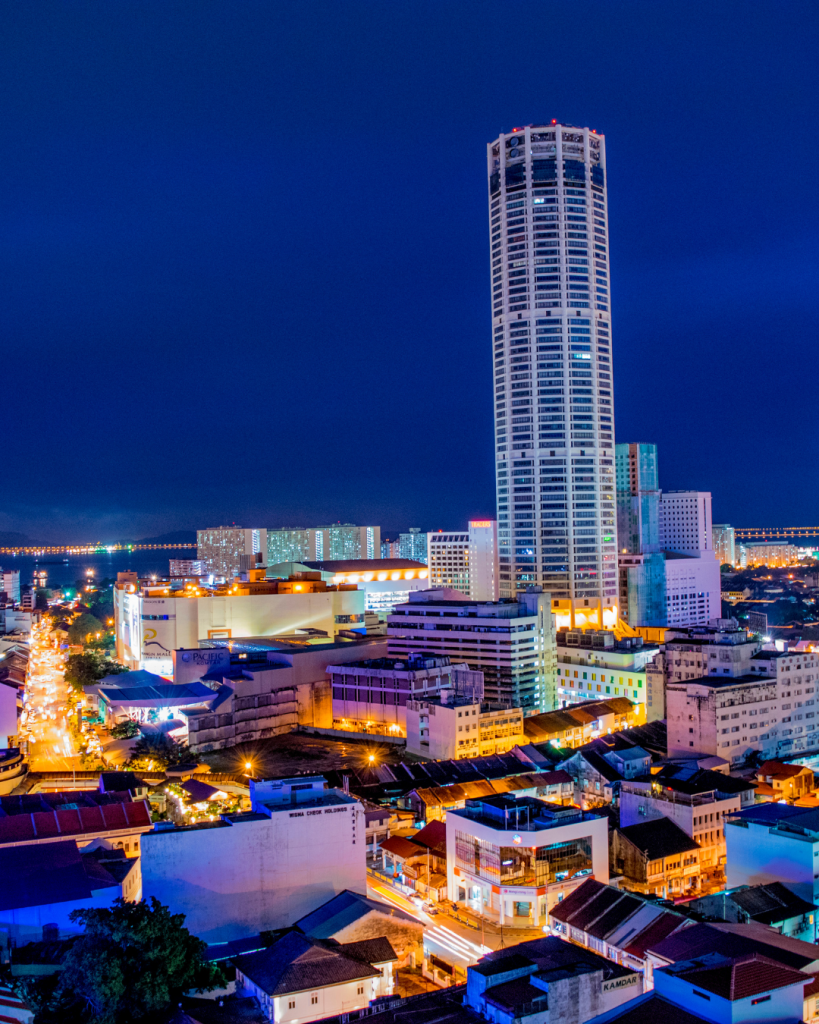
Penang’s standout is the combination of living heritage and everyday-easy pleasures: UNESCO-listed streets you’ll actually use, a food culture that turns dinner into your nightly highlight, and quick “reset” escapes (hill views, temples, beaches) that fit between work blocks.
Things To Do:
Do a self-guided wander through the UNESCO heritage streets and let the architecture set the pace.
Hunt for street art murals and make it a “walk + snack” loop.
Visit the Clan Jetties for a distinctive waterfront slice of local history (go respectfully; it’s a living community).
Take the funicular up Penang Hill for views + a cooler-feeling break.
Go to Kek Lok Si Temple (pictured Left) for a high-impact cultural stop.
Pick one “hawker night” as your weekly ritual (show up hungry, try one new thing, repeat your favorites).
If you want a museum-style culture day: Pinang Peranakan Mansion and Khoo Kongsi are popular anchors (opening hours worth verifying).
Good to know
Most people mix walking (in the core) with ride-hailing and buses. Rapid bus systems in Malaysia support cashless fare systems in many areas—exact options/routes in Penang are worth verifying for your dates and lines.
Expect tropical warmth and humidity. Rain patterns shift across the year; plan on occasional heavy showers and keep a light rain layer/umbrella handy.
Penang often feels like strong value, but your total spend is usually driven by (1) how central you stay, and (2) how often you choose “nice cafés + curated experiences” vs. hawker-and-wander living. Building quality varies—Wi-Fi, noise, and hot-water consistency are worth verifying before you commit.