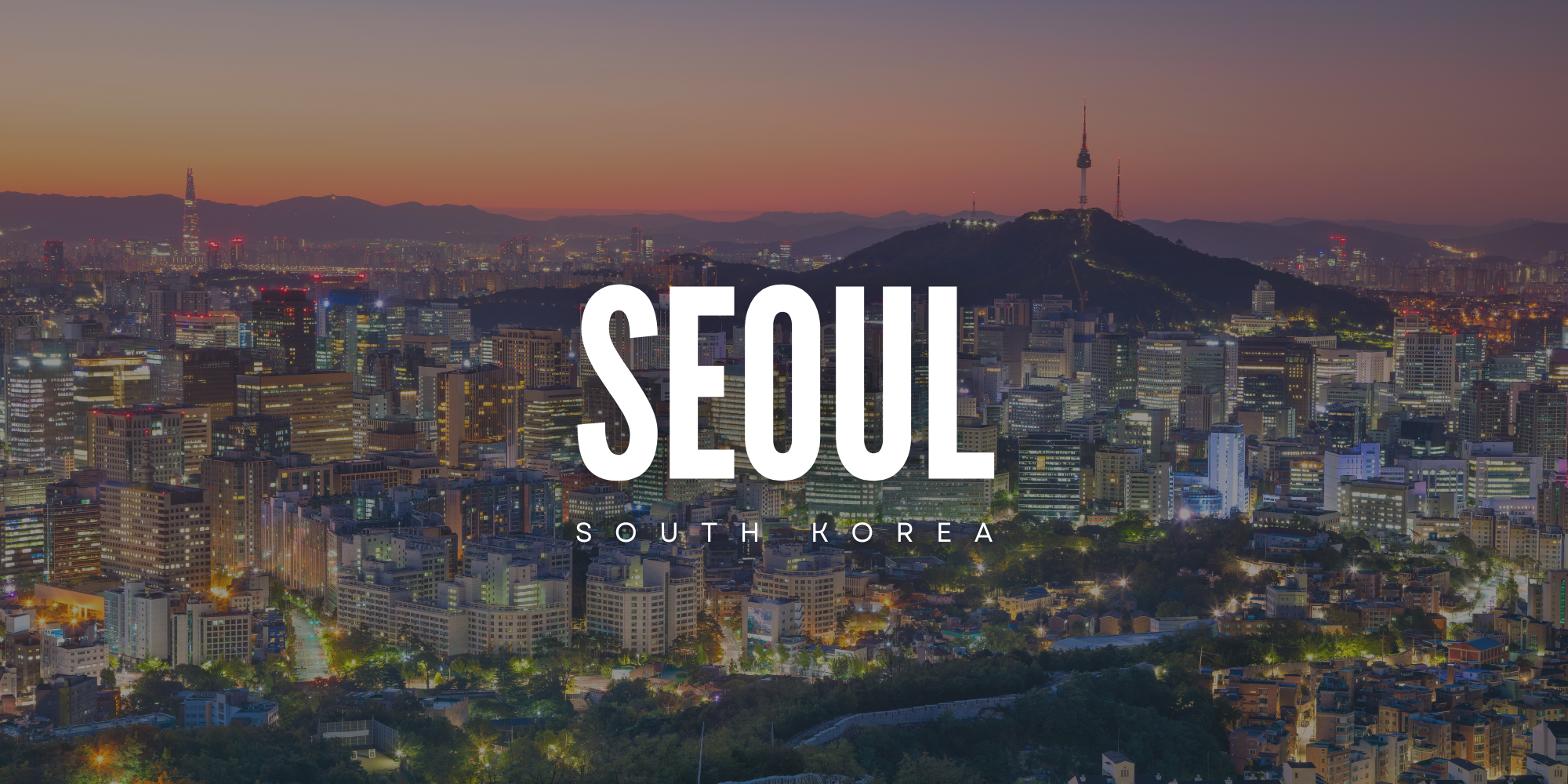
Atlas Snapshot:
Best for: If you want a high-functioning big-city base where you can lock in deep work during the week, then go full “choose-your-own-adventure” on weekends—food, design, neighborhoods, museums, mountains, late nights, all of it. Seoul is built for efficient routines once you learn the rhythm.
Not great if: You need “slow living” without trying—Seoul can feel fast, stimulating, and crowded in popular zones. Also, if you’re noise-sensitive or hate stairs/lines, you’ll want to be picky about where you stay and when you go out.
Best stay length: 1 month
Seoul Overall Budget: $3,000 per month
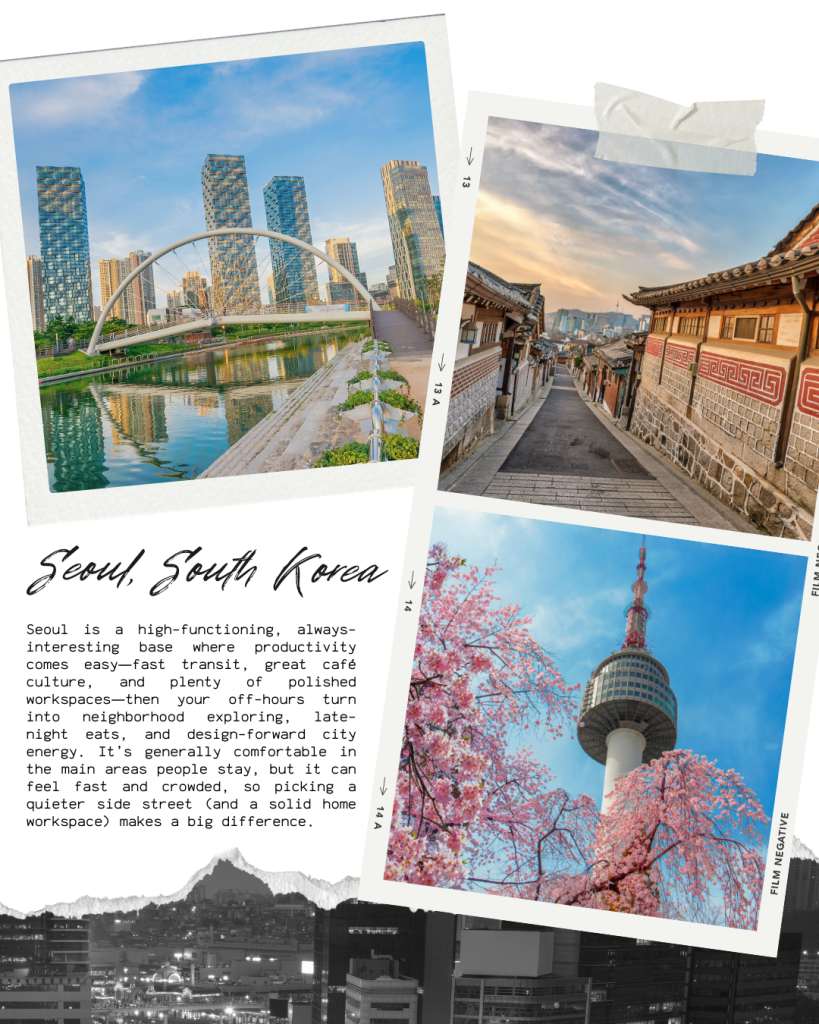
Where to Live (Choose Your Vibe)
Hongdae / Yeonnam (Mapo-gu)
Best for: social energy, creative scene, café density, easy meetups, weekend exploring
Quick caution: can run loud late; choose a side-street stay if you want sleep.
Gangnam / Yeoksam / Seolleung (Teheran-ro business core)
Best for: deep work + polished routines, coworking options, “commuter-easy” living
Quick caution: less “old Seoul charm,” more corporate; nightlife pockets can be lively.
Seongsu-dong (near Seoul Forest)
Best for: trendy-but-not-too-touristy vibes, cafés/pop-ups, a more “local creative” feel
Quick caution: hotspots get crowded on weekends—plan early starts.
Jongno / Anguk / Ikseon-dong area
Best for: historic texture, walkable sightseeing, classic Seoul atmosphere
Quick caution: tourist traffic + narrow streets; pick lodging carefully for noise.
Coworking + Café Reality Check
Coworking scene: Strong and professional, with plenty of options across central areas—easy to find a “focused weekday” setup or a more social community vibe. WeWork has multiple Seoul locations, including Hongdae and Seoul Square.
Café workability: Excellent café culture, but it’s normal for some cafés to discourage laptops during peak hours. Aim for bigger cafés, quieter off-peak windows, or places that clearly signal “work-friendly.”
Backup internet plan: Use a local eSIM + hotspot as your safety net (especially for day trips and older apartments).
Check out:
WeWork Hongdae — great “community + creative district” option
WeWork Seoul Square — premium central base near major transit
FASTFIVE — big local operator with many Seoul-area locations (good for flexibility)
Hive Arena (Yeongdeungpo-gu) — more community-forward feel (confirm day-pass fit)
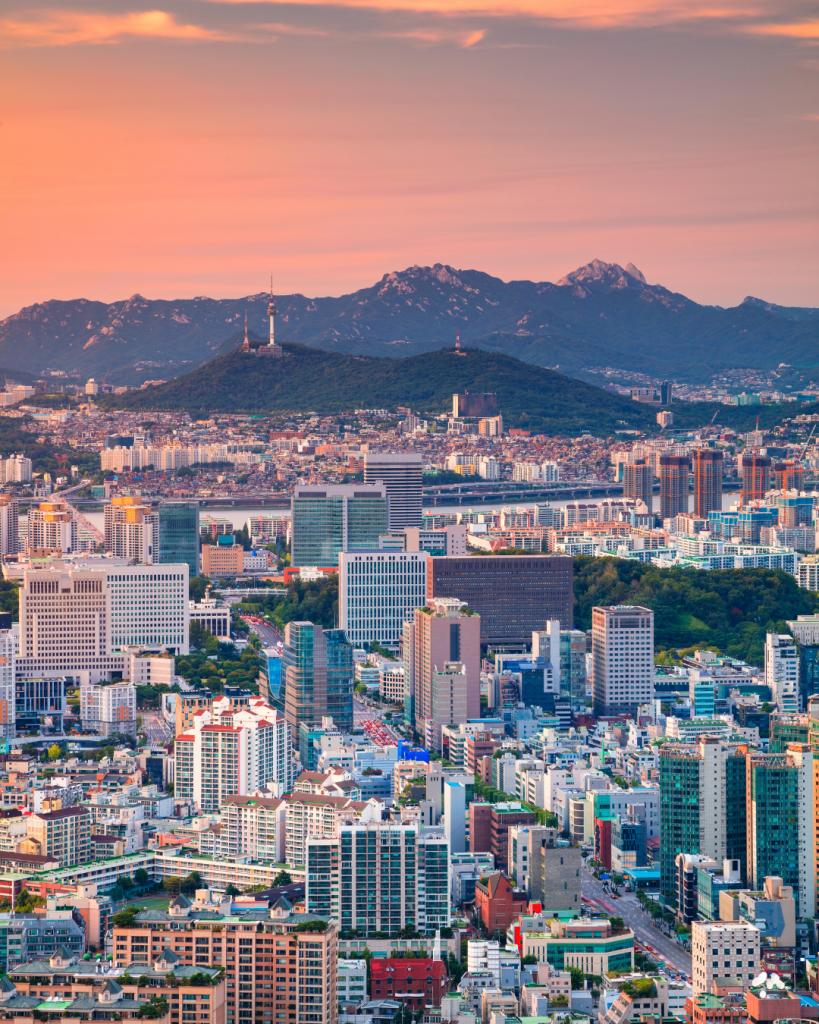
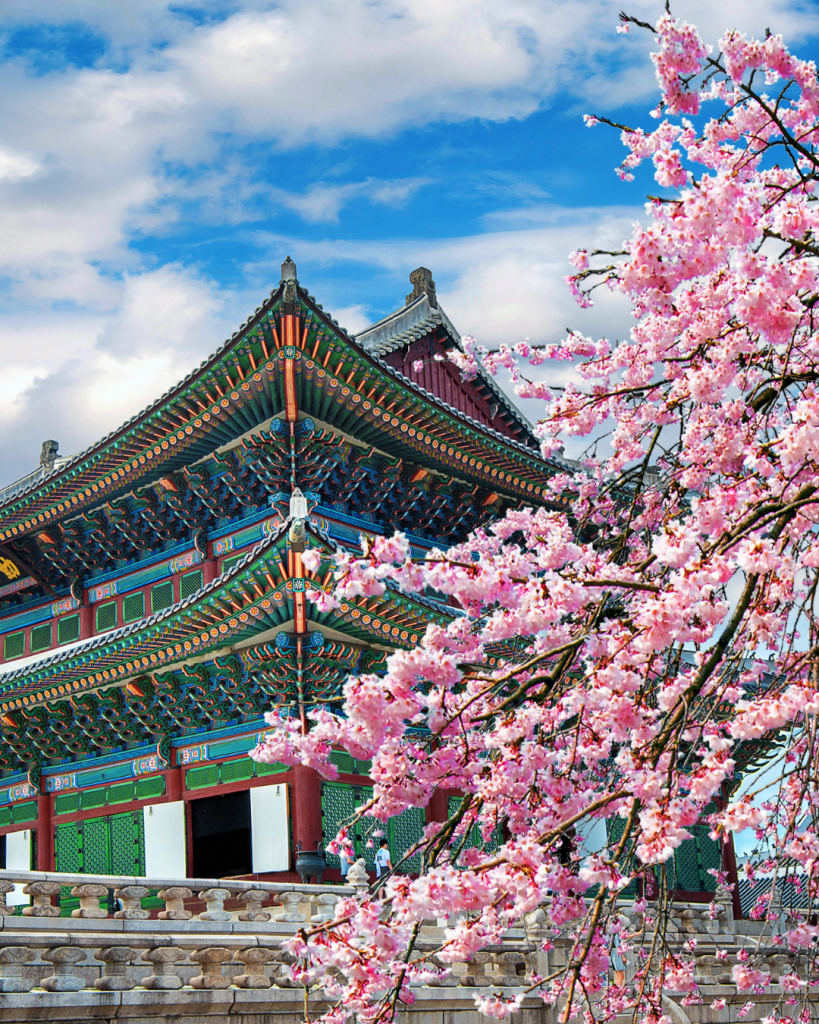
What makes IT unique + things to do
Seoul’s superpower is contrast: centuries-old alleyways and hanok pockets next to hyper-modern design, tech, and nightlife—plus a citywide obsession with great coffee, great food, and “what’s next.” You can build a tight weekly routine and still feel like you’re discovering a new city every weekend.
Things To Do:
Do a Jongno + Ikseon-dong wander for old-meets-new alley energy
Catch the Hongdae night scene (music, street energy, late eats)
Spend a day in Seongsu for cafés, pop-ups, and “Brooklyn-of-Seoul” vibes
Explore Gangnam/Teheran-ro if you like modern Seoul and big-city polish
Good to know
Transit is the default—fast, frequent, and practical for almost everything. Walking works well within neighborhoods; rideshare/taxis are handy late at night or when you’re crossing town.
Seoul has four seasons. Summer is typically hot and humid, and the wettest stretch often lands around late June–July (plan for rain-friendly routines).
Expect costs to climb in “headline” neighborhoods (especially central and south-of-the-river areas). You can keep things reasonable by staying one or two stops off the most famous hubs and prioritizing a quiet, work-friendly apartment setup over pure location.