
Atlas Snapshot:
Best for: If you want a laidback U.S. base where nature is the default reset: desert hikes, mountain air escapes, and wide-open skies. It’s also a great “routine city”—you can build a simple weekly loop around cafés, coworking, and a few go-to neighborhoods without feeling like you’re constantly sightseeing.
Not great if: You want a fully walk-everywhere city or you dislike driving. Tucson is very neighborhood-based, and summer heat can make mid-day exploring feel like a chore—choosing the right area matters a lot.
Best stay length: 2–6 weeks
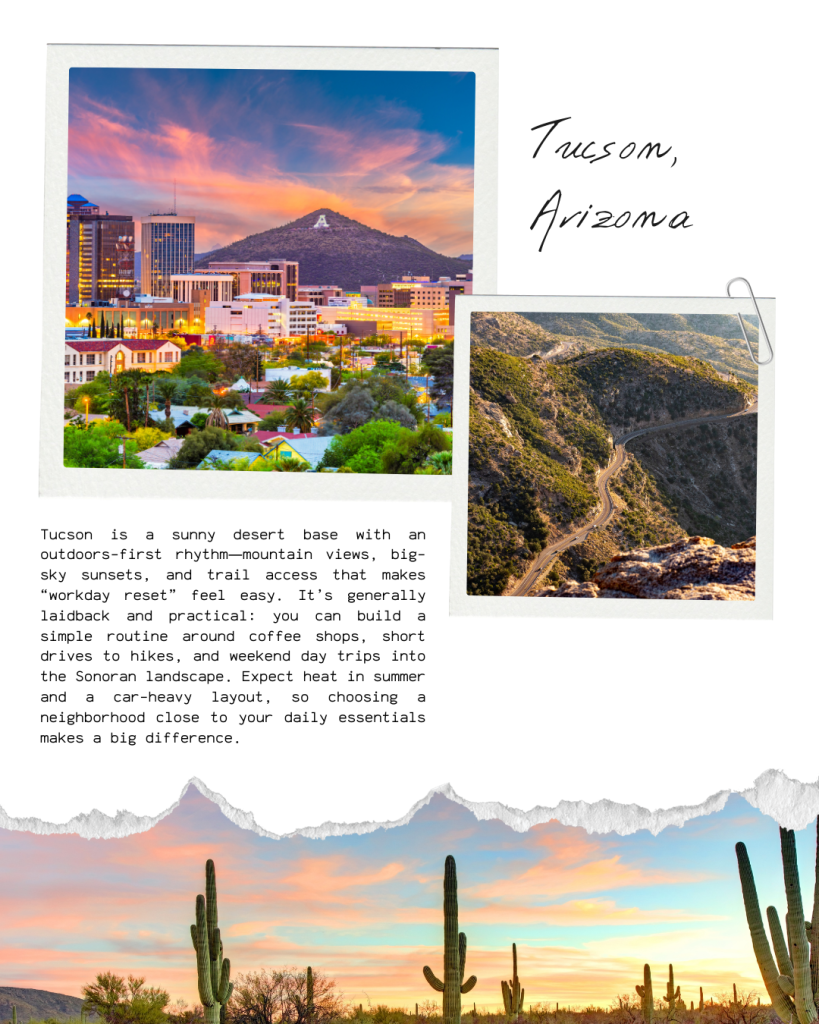
Where to Live (Choose Your Vibe)
Downtown / Congress St area
Best for: walkable core, restaurants, quick access to the streetcar
Quick caution: some blocks get lively at night; pick your exact street for noise/parking (worth verifying)
Historic Fourth Avenue / University-adjacent
Best for: cafés, bars, and an easy “wander + grab food” routine close to the action
Quick caution: can skew busy on weekends; noise varies a lot by block
Sam Hughes
Best for: charming residential feel near the University area; good for a calmer home base while staying close-in
Quick caution: you’ll still likely drive/ride for errands depending on your exact spot
Catalina Foothills
Best for: quieter, scenic “wake up to mountains” energy; great if you prioritize easy trail access
Quick caution: more car-dependent; plan your daily essentials so you’re not commuting across town
Coworking + Café Reality Check
Coworking scene: Tucson’s coworking options are solid and practical—enough variety for focused desk days, meetings, and a consistent weekly routine. The simplest move is picking one coworking “home base” close to where you’re staying, then using cafés for lighter sessions.
Café workability: Very doable (especially in the central districts), but laptop tolerance can vary at peak times—worth verifying your go-to spots’ vibe on weekdays.
Backup internet plan: Keep an eSIM with generous data so you can hotspot when Wi-Fi is slow or crowded.
Check out:
Spoke Coworking — Amenities-forward setup (including meeting rooms); nice for longer, structured workdays.
Regus – One South Church — Business-grade, reliable fallback when you want a predictable desk + meeting setup.
Spoke Coworking — Amenities-forward coworking with multiple Tucson locations; good for consistent deep-work days and meeting space.
The Post Workspaces — Flexible setup (coworking, private offices, day passes); a practical “show up and work” option.
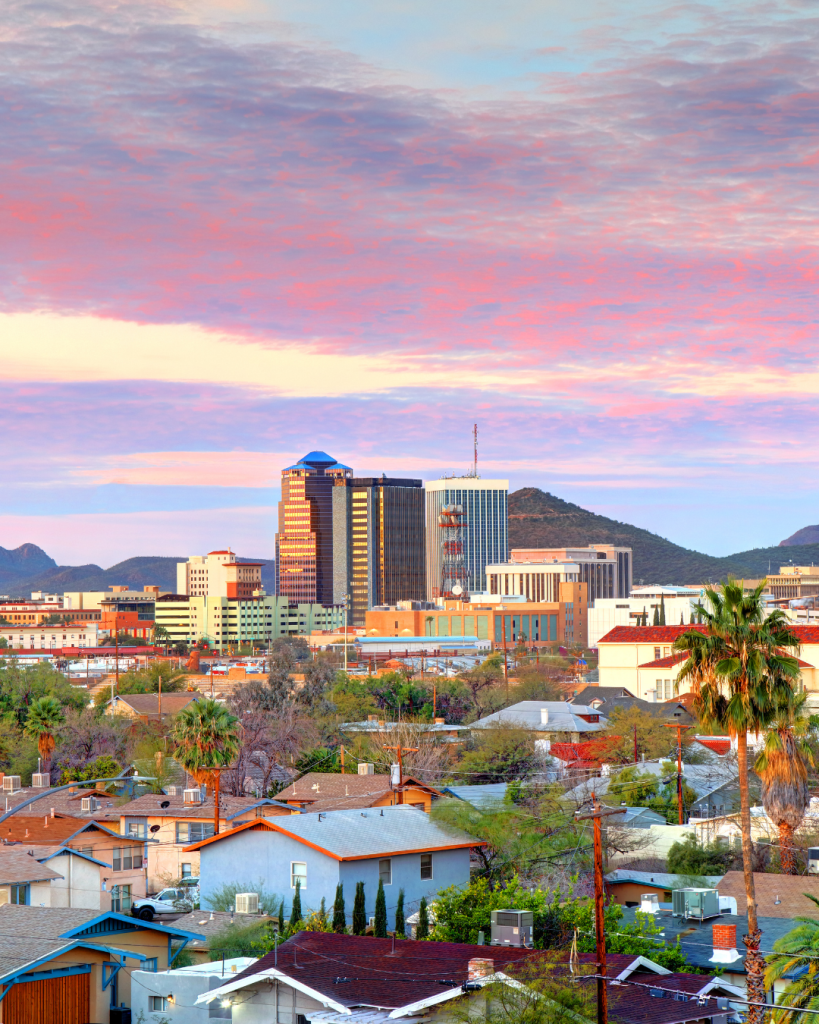
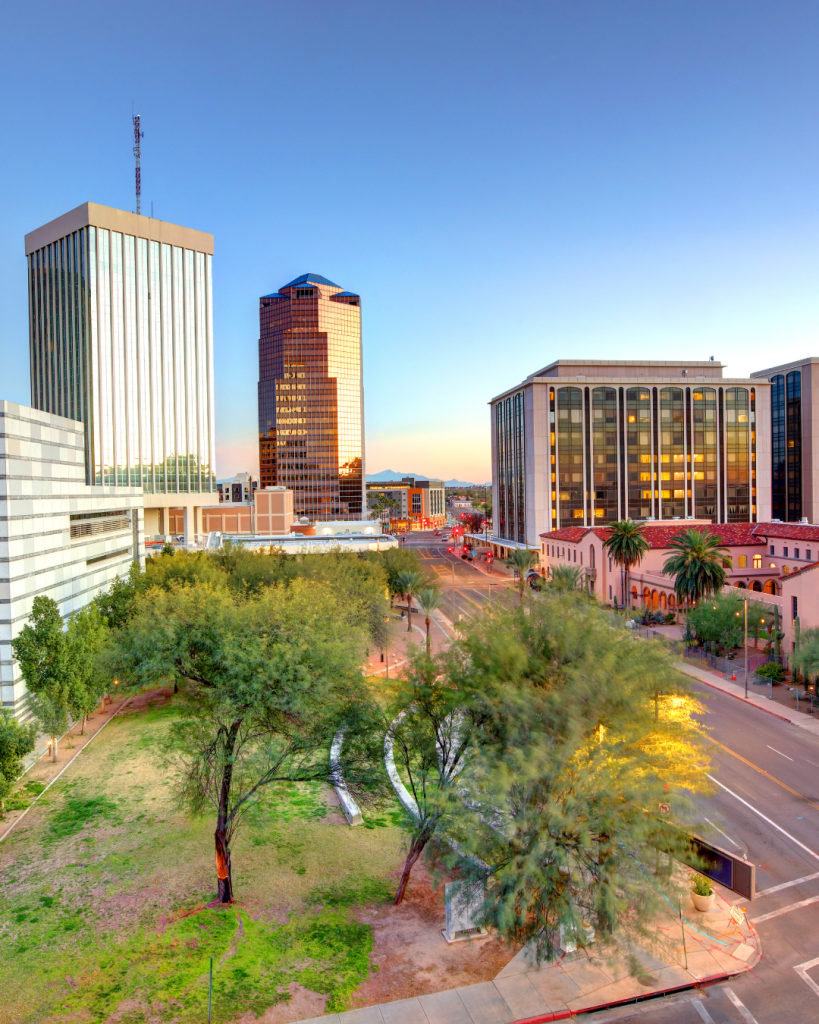
What makes IT unique + things to do
Tucson’s edge is the combo of Sonoran desert landscapes + a seriously good food identity—it’s officially recognized as a UNESCO City of Gastronomy, and the local ingredients and traditions show up everywhere from casual bites to destination meals. Add in the easy access to saguaros, mountain escapes, and dark-sky stargazing, and it’s the kind of place where “simple routines” still feel memorable.
Things To Do:
Sunrise or sunset drive/hike in Saguaro National Park (bring water, plan around heat).
Spend a half-day at the Arizona-Sonora Desert Museum for an “all-in-one” Sonoran desert deep dive.
Visit Mission San Xavier del Bac for history + architecture (check visitor hours).
Do a “district hop” via the Sun Link Streetcar to connect Downtown, Fourth Ave, and the university area with minimal friction.
Stargaze at the Mt. Lemmon SkyCenter (tickets/schedules are worth verifying).
If you’re into night skies, the newer “Astro Trail” concept is worth a look for planning a stargazing-focused week.
Good to know
Tucson is easiest with a car, but you can do a “semi-car-light” routine if you live near Downtown/4th Ave and use the streetcar for core district hops.
Expect warm desert conditions and meaningful temperature swings between day and night; summer brings hotter stretches, and seasonal storms can pop up (worth verifying for your exact months).
You can keep spending comfortable by choosing one neighborhood base (to cut down on driving/parking friction) and leaning into local markets and casual food—your biggest swing factor is usually accommodation type and location.