Why Digital Nomads Are Flocking to Spain, Greece & Portugal in 2025

Southern Europe is officially having its moment.

Once considered laid-back vacation spots, Spain, Greece, and Portugal have evolved into three of the most desirable digital nomad destinations in the world — and the shift has been fast. Over the past two years, all three have introduced or refined digital nomad visas, upgraded infrastructure, and developed vibrant communities that make long-term remote living not just possible, but easy.

In 2025, this “Mediterranean triangle” is attracting thousands of location-independent professionals looking for sun, simplicity, and sustainability — without paying Northern Europe prices.

Let’s explore why nomads are setting their sights on Southern Europe, what makes each country stand out, and what life here really looks like.

The Big Picture: Why Southern Europe Now?

After years of bouncing between Southeast Asia, Latin America, and Northern Europe, digital nomads are discovering something that Southern Europeans have always known: life is better where the pace is slower and the sun is warmer.

But it’s not just lifestyle driving this migration — it’s policy, cost, and opportunity.

  • Visa clarity and long-term options:
    Since 2022, Spain, Greece, and Portugal have rolled out remote work visas that allow non-EU residents to live and work legally for one to five years.
    These aren’t vague “loophole” setups — they’re official pathways backed by national governments.
  • Post-pandemic priorities:
    Workers around the world are now structuring careers around lifestyle rather than geography. Cities like London, Berlin, and Amsterdam have grown prohibitively expensive, pushing remote professionals to seek affordability and livability.
  • Infrastructure and community:
    2024 saw record coworking openings in Lisbon, Valencia, and Athens, with nomad meetups doubling in size year over year. (Nomad List 2024 Data) Reliable Wi-Fi, startup-friendly ecosystems, and direct international flights are now standard across the region.
  • The affordability factor:
    Rent, food, healthcare, and transportation all come in lower than Northern or Western Europe — often by 25–40%. Combine that with lower tax incentives (especially in Greece and Portugal), and the numbers make sense.


In short, the Mediterranean lifestyle has gone from aspirational to achievable — and nomads are cashing in on the opportunity.

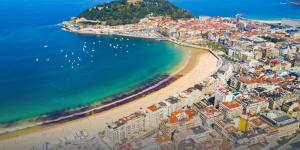
Valencia, Spain, Photographer: V_E /Shutterstock

Spain: Structure + Sunshine

Spain: Structure + Sunshine

Spain’s digital nomad boom began with clarity — and it hasn’t slowed down.


Lifestyle & Affordability

Spain has long balanced work-life quality better than most countries — but now, that balance aligns perfectly with digital nomad needs. The cost of living remains reasonable: a comfortable single’s monthly budget in Valencia or Málaga hovers between €1,500–€1,900, while in Madrid or Barcelona, it’s closer to €2,300–€2,600.

Beyond affordability, Spain offers incredible diversity. You can live in a coastal surf town like Cádiz, a creative hub like Barcelona, or a mountain village in Andalusia — all with reliable internet and easy travel links.

The country also made headlines in late 2024 for a rural revitalization initiative that pays digital nomads up to €15,000 to move to underpopulated regions like the Ambroz Valley.

Add in excellent healthcare, fast trains, and the world’s most flexible tapas schedule — and Spain’s appeal becomes obvious.

Visa Structure & Requirements

Spain officially launched its Digital Nomad Visa in early 2023, fine-tuned through 2024 to make the process smoother. Applicants must show an income of at least €2,760/month (200% of Spain’s minimum wage). The visa allows remote work for non-Spanish employers and up to 20% of income from Spanish clients.

Once approved, you can live in Spain for one year (if applying from abroad) or three years (if applying from within Spain), renewable up to five years total. It also includes family reunification rights, meaning partners and dependents can apply together.

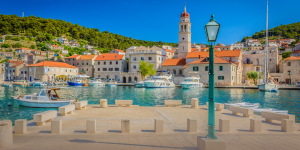
Thessaloniki, Greece, Photographer: frantic00 /Shutterstock

Greece: Europe’s Quiet Gem on the Rise

If Spain feels established and structured, Greece feels like the insider pick — a little quieter, a little wilder, and a lot more affordable.

Lifestyle & Affordability

Greece offers some of the best value in the EU. As of 2025, rent for a one-bedroom apartment in Athens averages around €550, with living costs (excluding rent) around €850–€900/month.

Outside the capital, prices drop dramatically. In cities like Thessaloniki or Heraklion (Crete), you can live well on €1,200–€1,400/month total. Internet speeds are improving, and the government continues to expand fiber coverage to islands.

What sets Greece apart is its tax incentive: eligible expats can get a 50% reduction on income tax for up to seven years, making it one of Europe’s most generous relocation perks.

Combine that with island sunsets, mountain trails, historic ruins, and Mediterranean cuisine — and you get a lifestyle that feels luxurious without the price tag.

Visa & Residency

Greece launched its Digital Nomad Visa in 2021, but it gained serious traction in 2024 as processing times improved and more applicants qualified. The visa allows remote work for one year, extendable via a two-year renewable residence permit.

Applicants must earn €3,500/month post-tax, increasing by 20% if they bring a partner and 15% per dependent child.

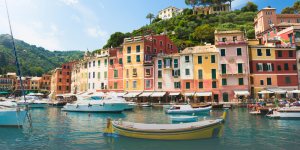
Lagos, Portugal, Photographer: DaLiu /Shutterstock

Portugal: The Experienced Nomad Magnet

If Spain is the structured option and Greece the emerging gem, Portugal is the veteran — the place that put Southern Europe on the digital nomad map years before the trend exploded.

Lifestyle, Community & Cost

Portugal’s long-standing appeal lies in its balance — beautiful weather, strong safety record, and tight-knit nomad community. Lisbon remains a global hub for entrepreneurs, but cities like Porto, Lagos, and Coimbra now attract nomads seeking slower rhythms.

As of early 2025, average monthly budgets are:

  • Lisbon: €1,700–€1,900
  • Porto: €1,400–€1,600
  • Smaller cities or rural areas: €1,100–€1,300


Portugal also wins on community. From the Nomad Village in Madeira to Lisbon’s “Second Home” coworking loft, you’ll find collaboration, events, and people who understand the nomad lifestyle — without the transience of Bali or Chiang Mai.

Add in Portugal’s excellent public transport, affordable healthcare, and ocean access, and it’s clear why it’s still at the top of every digital nomad index.

Visa & Legal Framework

Portugal’s Digital Nomad Visa (D8) launched in 2022 and became one of the most sought-after in Europe. As of 2025, applicants must earn at least €3,280–€3,480/month (four times Portugal’s minimum wage).

You can apply for two options:

  • A temporary stay visa (up to 1 year)
  • A residency visa (renewable up to 5 years)


Once approved, visa holders can bring dependents, access healthcare, and move freely within the Schengen Zone.

Cost Comparison: Spain vs. Greece vs. Portugal (2025)

Feature🇪🇸 Spain🇬🇷 Greece🇵🇹 Portugal
Nomad Visa Income Requirement€2,760/month€3,500/month (post-tax)€3,280–€3,480/month
Avg. Rent (1-Bed City Center)€900–€1,200€500–€700€900–€1,000
Monthly Budget (Comfortable)€1,800–€2,300€1,200–€1,600€1,400–€1,900
Tax IncentiveNone (yet)50% income tax reduction (up to 7 yrs)20% reduction for NHR residents (phasing out for new applicants in 2025)
Visa DurationUp to 5 yearsUp to 3 yearsUp to 5 years
Lifestyle EdgeUrban + coastal varietyScenic + affordableBalanced + well-connected

Takeaway: Spain offers structure and infrastructure; Greece wins on affordability; Portugal strikes the ideal balance between ease, value, and community.

Beyond Work: Life in the Mediterranean Lane

What’s drawing so many people isn’t just paperwork — it’s perspective.

Nomads moving to Southern Europe aren’t chasing productivity hacks; they’re chasing quality of life. It’s coffee on a cobblestone street in Porto before your first meeting. A morning hike in Crete. A sunset swim on the Costa del Sol.

Each country offers a lifestyle defined by simplicity and connection:

  • Spain gives you culture, festivals, and food that feels like celebration.

  • Greece surrounds you with ancient history and affordable coastal calm.

  • Portugal blends safety, charm, and a deep sense of community.


It’s about trading “hustle culture” for a slower rhythm that still gets you where you want to go.

Lisbon, Portugal, Photographer: Pawel Kazmierczak /Shutterstock

Thinking of Making the Move? Start Here

If you’re considering relocating, timing is everything. Here’s how to plan:

  1. Research visa eligibility early. Each country’s process can take 2–3 months, so apply before peak summer.

  2. Budget smart. Include housing deposits, visa fees, and potential tax consultations.

  3. Visit before moving. Spend at least a week in your top two cities.

  4. Network online first. Join local Slack or Facebook groups — they’re goldmines for short-term rentals and job leads.

  5. Compare cost-of-living tradeoffs. What’s affordable to one person (Lisbon) might stretch another — a city like Thessaloniki or Valencia could deliver more value.

In 2025, Spain, Greece, and Portugal have become Europe’s remote work power trio — a region that delivers everything nomads dream about: sun, safety, affordability, and community.

It’s not just about working from the Mediterranean. It’s about building a life that feels worth working for.

If you’re ready to make the move — or just curious which of these three fits you best — check out our detailed Nomad Cloud country guides for visa steps, city picks, and insider checklists to get started.