Destinations Collections Experiences Stays Reads Tools Itinerary Builder Where Should...
Read More
Jose grew up in Tenerife — a Spanish island in the Atlantic that most people fly to for holidays and almost nobody leaves in search of something more. He left in search of something more.
Before the tech career that would eventually fund his current life, he worked on a goat farm, handling everything from milking to cheese production. It was physical, grounded work — the kind that has nothing to do with a screen or a startup — and it sits in his biography alongside a solo cycling trip from Spain to the Middle East with the quiet confidence of someone who has never needed his choices to make sense to anyone else. When he finally moved abroad for the first time in 2014, he went to China. Not Thailand, not Portugal, not the well-worn expat trail. China. The biggest cultural shock available. The most extreme version of stepping outside everything familiar.
He lived in four countries before landing in Wrocław. Each one left something behind. China left the most.
The tech career came after the wandering, not before it. He moved into mobile app development and spent years building real skills and real savings in an industry that rewarded precision and patience. By 2026, he and his wife had decided to use what he’d built — not to buy a house or a conventional life, but to buy time. Time to build something that was actually theirs.
The move to Wrocław started pragmatically. He was accepted for an internship there, went, and found a city that suited him in ways he hadn’t fully anticipated. He stayed. Three years later he’s still there, and the internship is a distant footnote to a story that has grown well beyond it.
He and his wife are building BaifoWorld — a travel content project centered on places worth staying in rather than just passing through — alongside a practical Wrocław eBook written in Spanish and a small pocket travel agency focused on Poland. The income from these projects is minimal right now. Deliberately so. They’re in the building phase, reinvesting everything the work generates back into growing it, living on savings from his years in tech while the foundation takes shape.
What he didn’t fully anticipate going in was how different this particular kind of uncertainty would feel compared to everything that came before it. Cycling across continents, living in China, changing countries — those risks had a shape to them. This one, the slow grind of building something creative with your own money and no external timeline, is harder to prepare for. The freedom is exactly as real as he imagined. So is everything that comes with it.
Jose’s monthly budget in Wrocław is one of the most detailed and honest breakdowns in this archive. Here’s what life costs for a couple in one of Europe’s most underrated cities:
That number deserves a moment. A couple, living in a real European city with a genuine quality of life, for under $1,800 at the absolute top end. It’s not a compromise number — it’s a comfortable one, achieved in a place with good food, good transport, good culture, and winters that admittedly take some getting used to.
The surprise expense was the one nobody mentions in the blog posts: winter heating. Depending on the building and heating system, utility bills can spike significantly in the colder months. It catches most newcomers off guard when the first winter bill arrives. Budget it in explicitly before you arrive, not after.
On the income side, the honest answer is that they’re currently running close to zero on inbound. The tech savings are the runway. The projects are early. This is the version of the nomadic creative life that almost no one shows publicly — the period when the dream is architecturally sound but financially thin, when you’re trading time you bought with someone else’s industry for the chance to build something of your own.
Jose and his wife are three years into Wrocław, working eight-hour days on BaifoWorld and their destination projects. Home base is their apartment — consistent, comfortable, the right environment for focused work — though when they travel they fall into the natural nomad rhythm of finding good cafés and quiet corners in each new city.
The routine is intentional and structured. He goes to the gym regularly, uses the sauna, eats well. These aren’t lifestyle extras. When you’re building something with no external deadlines, no manager checking in, no colleagues to notice when you’re off — the habits that keep you functional become the architecture that everything else rests on. He learned this the hard way early on, when he let the work consume the day and neglected the basics. He doesn’t make that mistake anymore.
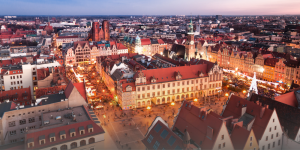
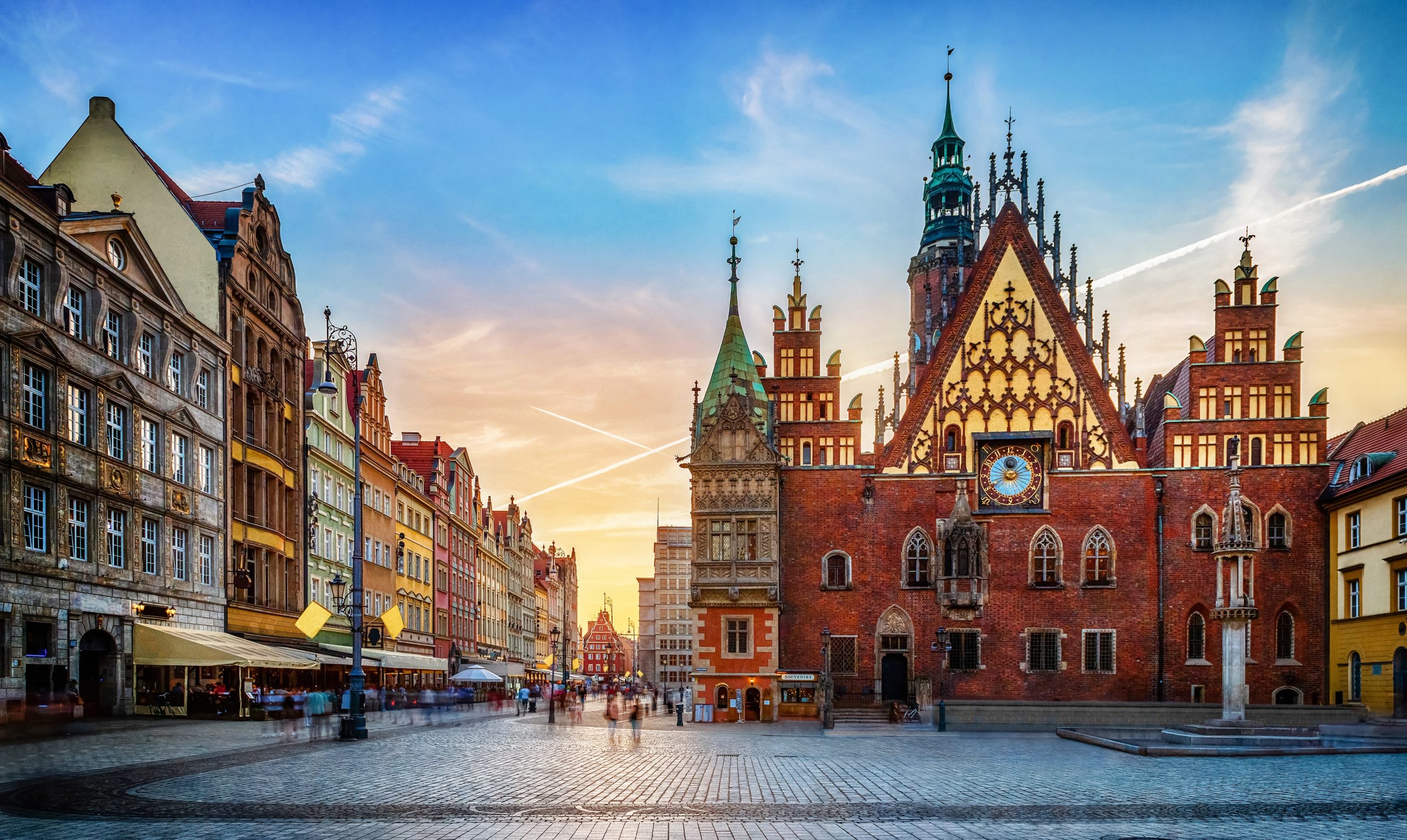
Wrocław itself keeps delivering. What he loves: the energy of a proper European city compressed into something still human-scaled and livable. The old town is genuinely beautiful. The café culture is strong. The public transport is cheap and reliable. And the city’s position in central Europe — close to Prague, Berlin, Vienna — makes it an exceptional base for anyone who wants to travel without paying premium prices to do it.
What he doesn’t love: the winters. Cold, dark, longer than you’d expect if you’re arriving from southern Spain or anywhere with reliable sun. He’s adapted, but he’s honest about the adjustment.
Jose's path is the most non-linear in this archive — goat farm, long-distance cycling, app developer, now travel creator. What makes it replicable isn't the career history. It's the structure underneath: build real skills, save deliberately, choose an affordable base, and use the runway to build something that's actually yours.
He spent years building technical skills as a mobile app developer, saved the income from that career, and used those savings as a runway to build something creative with his wife. He chose Wrocław not for maximum cheapness but for quality of life, affordability, and connectivity. He's building slowly from a base of genuine local knowledge — three years in the same city — rather than moving fast and knowing nothing deeply.
Jose's model is for someone with professional skills already banked and savings already built. This is not a path that opens from zero — the runway is everything.
If Jose's story resonates — if you have professional savings and a project you keep postponing — the most useful thing you can do today is calculate your actual runway. At $1,500/month for two, twelve months costs $18,000. At $1,000/month solo, it costs $12,000. That's the window. Everything else follows from knowing whether you have it — and if you don't, what it would take to build it.
Jose’s biggest early mistake was neglecting his own maintenance. When you work remotely and build your own projects, the days blur, the body stays still, and the output slowly degrades without you noticing. He now prioritizes the gym, the sauna, and eating well as structural requirements rather than optional additions. Not wellness culture — basic operational maintenance of the thing everything else runs on.
What he wishes he’d known: that the freedom is real and so is the ordinary Tuesday. The nomadic life doesn’t deliver constant adventure. It delivers freedom — which turns out to include a lot of regular days, quiet responsibilities, and moments where the project isn’t working and you’re far from your closest friends. Going in with accurate expectations makes the difficult days survivable and the genuinely good days land with full weight.
His advice for anyone sitting on the decision: don’t overthink it. Try it. Spend a few months somewhere else and see how it feels before you decide anything permanent. But pair that openness with structure — good health habits, a financial plan, a clear sense of how you’ll support yourself. “Freedom is great,” he says, “but it works best when you have some stability behind it.”
His Wrocław eBook — practical, Spanish-language, written from three years of living in the city — is available through BaifoWorld at baifoworld.com.
Destinations Collections Experiences Stays Reads Tools Itinerary Builder Where Should...
Read MoreDestinations Collections Experiences Stays Reads Tools Itinerary Builder Where Should...
Read MoreDestinations Collections Experiences Stays Reads Tools Itinerary Builder Where Should...
Read MoreThe full Nomad Stories archive — searchable by job type, income source, and starting point — is inside Nomad Atlas. Plus your personalised income path, honest city budgets, and a step-by-step plan to make your first move.
Join Nomad Atlas →